Vastu Indoor Plants: Direction-by-Direction Placement Guide
Which indoor plants vastu shastra recommends for each direction of the home, which to avoid, and how to follow the placement without putting a plant where it will die.
The short answer
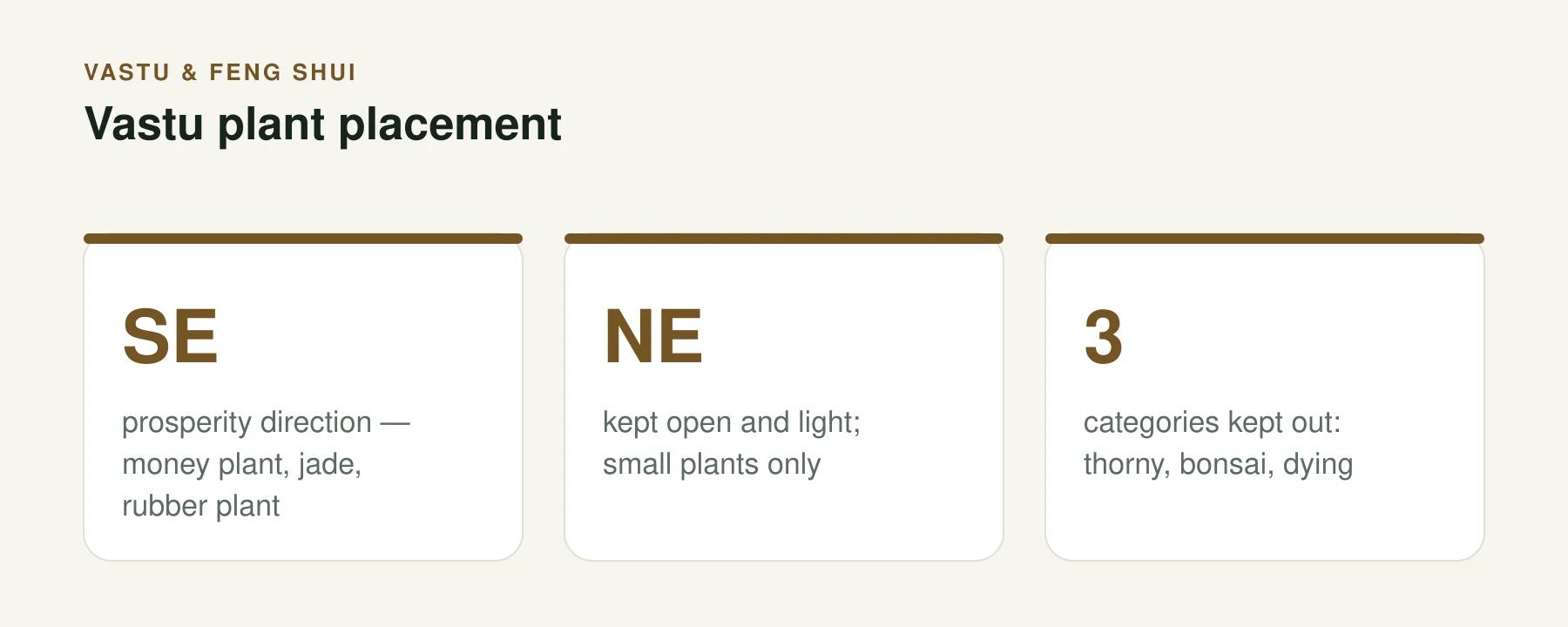
- Vastu places money plant, jade and rubber plant in the south-east, and keeps the north-east open.
- Thorny plants, bonsai and dying plants are kept out of the home in every reading.
- Check the light in a direction before committing a plant to it — a dying plant is inauspicious anyway.
Key takeaways
- South-east is the prosperity direction for plants; north-east should stay light and uncluttered.
- Vastu treats a dying plant as inauspicious, which makes species choice a spiritual matter as well as a practical one.
- Thorny plants, bonsai and dead plants are the three categories consistently kept out of the home.
- Check the light in a direction before committing a plant to it — in the northern hemisphere, north-facing rooms are the dimmest.
Vastu shastra assigns qualities to each direction of a building and recommends what belongs where. For plants the guidance is fairly consistent across sources, and — this genuinely surprised me the first time I mapped it out — it lines up with real light conditions more often than not. That means you can usually follow the tradition without harming the plant. Where the two do pull in opposite directions, this guide says so plainly rather than pretending otherwise.
#Placement by direction
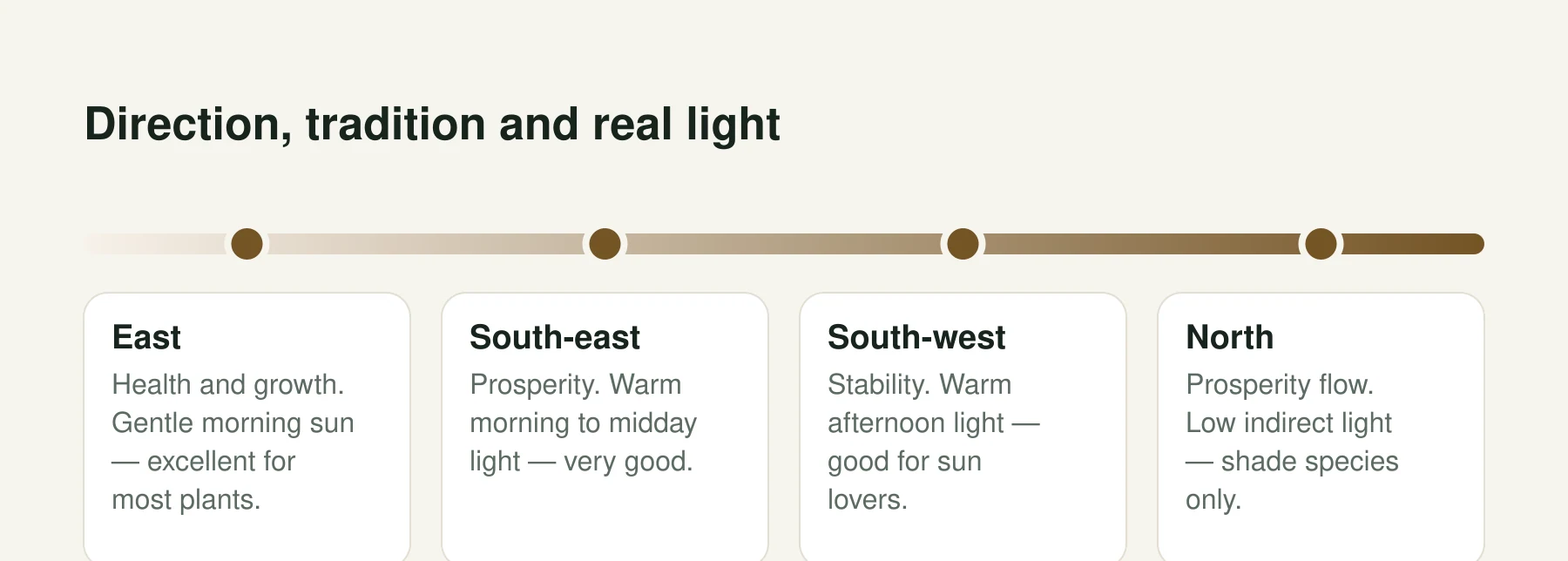
| Direction | Vastu association | Plants recommended | Actual light |
|---|---|---|---|
| South-east | Wealth, Venus, fire element | Money plant, jade, rubber plant | Warm morning to midday light — good |
| East | Health, new beginnings | Bamboo, areca palm, tulsi, flowering plants | Gentle morning sun — excellent |
| North | Career, prosperity flow | Money plant, bamboo, small foliage plants | Low, indirect all day — dim |
| North-east | Spiritual clarity, water element | Tulsi, small light plants only | Bright, soft light — very good |
| South | Fame, strength | Snake plant, tall sturdy plants | Strongest light — bright to direct |
| South-west | Stability, relationships | Heavy, large plants; avoid clutter | Warm afternoon light — good |
| West | Gains, creativity | Flowering plants, peace lily | Afternoon and evening sun — good |
| North-west | Movement, support | Small plants, herbs | Moderate — variable |
#The plants vastu recommends indoors
- Money plant — prosperity; south-east, trained upward rather than trailing on the floor.
- Tulsi — purity and protection; north or north-east, and in a genuinely sunny position.
- Bamboo / lucky bamboo — growth and longevity; east or south-east.
- Areca palm — positive energy and calm; east or north, in bright indirect light.
- Jade plant — prosperity; near the entrance or in the south-east.
- Rubber plant — wealth and abundance; south-east.
- Snake plant — protection and air; south, east or south-east, and kept away from the bedroom in some interpretations.
- Peace lily — harmony; living areas with indirect light.
#What vastu says to avoid
| Avoid | Reason given | Practical note |
|---|---|---|
| Cactus and thorny plants | Associated with conflict and obstacles | Keep on a balcony — they need full sun anyway |
| Bonsai | Stunted growth is read as restricting the household | A demanding plant indoors regardless |
| Dead or dying plants | Stagnant, inauspicious energy | Replace or revive promptly |
| Large plants in the north-east | Blocks the flow of the most sacred direction | Use small plants there instead |
| Plants in the centre (brahmasthan) | Centre should remain open | Also the darkest part of most rooms |
| Artificial and dried plants | Lifeless, associated with inertia | No horticultural argument either way |
#Room-by-room vastu placement
Entrance
A healthy, well-shaped plant on either side of the door is considered welcoming — jade or a small palm. Avoid thorny plants and anything shedding leaves onto the threshold.
Living room
Place larger plants in the south, west or south-west so they do not block the lighter north-east. Money plant in the south-east corner is the most common arrangement.
Kitchen
The south-east is the fire zone and suits small herbs on a windowsill. Keep plants away from the cooking area itself, where heat and oil damage leaves.
Bedroom
Vastu is cautious about heavy plant presence in bedrooms. Small plants in the south-west or west corner are generally accepted; cacti and thorny plants are not.
Bathroom
Plants are encouraged for freshness — and the humidity genuinely suits ferns, pothos and peace lilies. Just check that the room has some natural light.
Balcony
The place for tulsi, cactus, flowering and fruiting plants — everything that needs real sun and everything discouraged indoors.
#Where vastu and horticulture conflict
The most common clash is a north-facing room. In the northern hemisphere a north wall receives no direct sun and the softest, lowest light in the house — but vastu associates the north with prosperity and flow, so plants are often placed there. The fix is straightforward: use species that genuinely tolerate low light. A money plant, ZZ plant, snake plant or cast iron plant will hold condition in a north-facing position for years. A tulsi, hibiscus or flowering plant will not.
For the plants themselves and their symbolism, see our guide to lucky indoor plants; for the Chinese tradition and its different logic, see feng shui indoor plants.
Frequently asked questions
Which plant is best as per vastu for the home?
The money plant, placed in the south-east corner, is the most widely recommended vastu plant for prosperity. Tulsi in the north or north-east, bamboo in the east and jade near the entrance are the other classic choices.
Which direction should indoor plants face as per vastu?
East and south-east are the primary directions for indoor plants — east for health and growth, south-east for prosperity. The north-east should be kept light and open, with only small plants such as tulsi placed there.
Which plants are not allowed in the house as per vastu?
Cacti and thorny plants, bonsai, and any dead or dying plant. Large or heavy plants are also kept out of the north-east corner, and the centre of the home is traditionally left open.
Is the money plant good for vastu?
Yes, it is the plant most strongly associated with prosperity in vastu shastra. It is placed in the south-east, kept indoors, and trained to grow upward rather than trailing across the floor.
Can I keep plants in the bedroom as per vastu?
Small plants in the south-west or west corner are generally accepted. Vastu discourages heavy plant presence in bedrooms and specifically excludes cacti and thorny plants from sleeping spaces.
Sources and further reading
- Houseplants — Royal Horticultural Society. General indoor growing guidance, light and watering advice.
- Plant Finder — Missouri Botanical Garden. Botanical names, native range and cultural requirements.
- North Carolina Extension Gardener Plant Toolbox — NC State Extension. Species data, hardiness and toxicity cross-checks.
- Toxic and Non-Toxic Plants List — ASPCA Animal Poison Control. Toxicity status of every plant named, checked under its botanical name.
Related guides
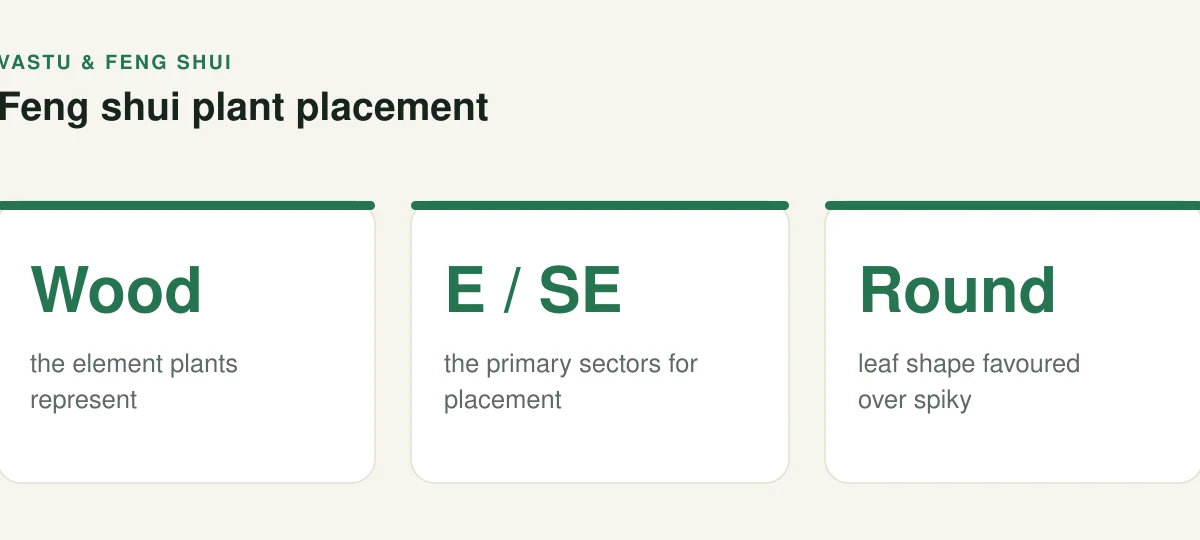
Feng Shui Indoor Plants: Placement, Shape and Positive Energy
How feng shui uses plants to move energy through a home — which shapes and species to choose, where the wood element belongs, and what to keep out of the bedroom.
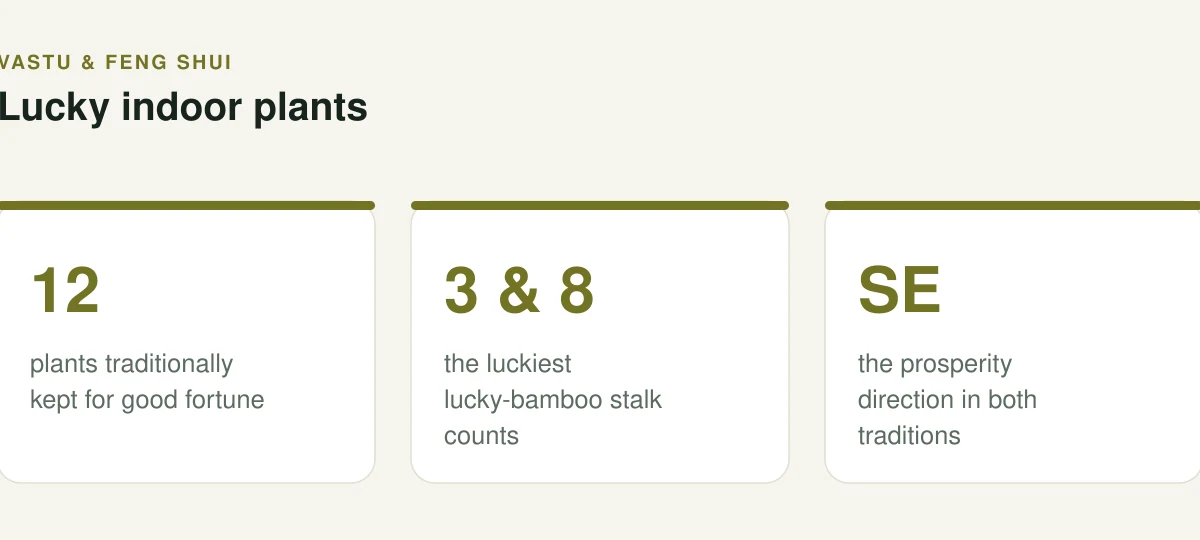
Lucky Indoor Plants: 12 Plants for Good Luck and Where to Put Them
The 12 plants traditionally kept for good luck and prosperity — money plant, lucky bamboo, jade, tulsi and more — with the placement each tradition recommends.
Jade Plant Indoor or Outdoor? Care, Placement and Vastu
Whether to keep a jade plant indoors or outside, how often to water it, why leaves drop or go soft, and where vastu and feng shui place it for prosperity.