Indoor Bamboo Plant Care: Lucky Bamboo, Real Bamboo and the Difference
Lucky bamboo is not bamboo. Here is how to care for each type indoors, why stalks turn yellow, how many stalks to keep, and which true bamboos survive inside.
The short answer
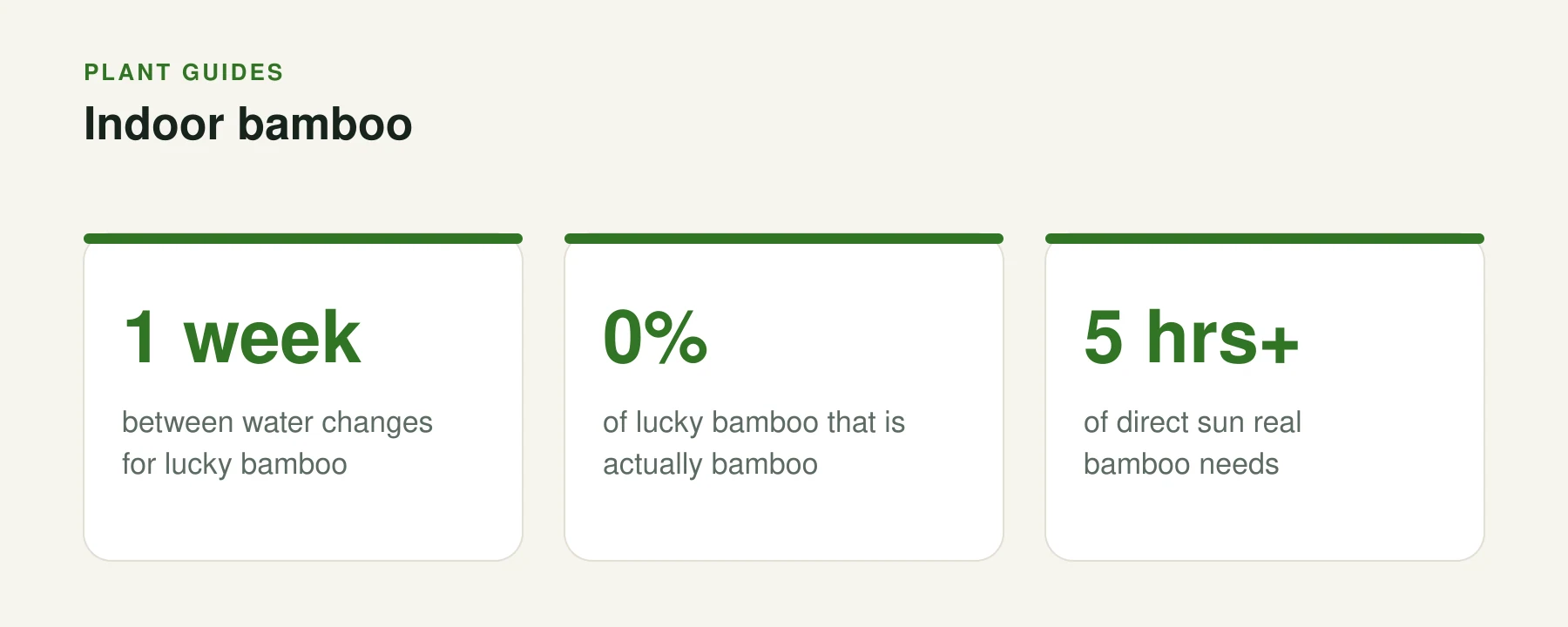
- Lucky bamboo is not bamboo — it is a dracaena, and it grows in a vase of water.
- Change the water weekly and use filtered water; yellow stalks are usually fluoride or chlorine.
- True bamboo needs full sun and constantly moist soil, which is why it usually fails indoors.
Key takeaways
- Lucky bamboo is a dracaena — it needs no soil, no sun and very little attention.
- Yellow stalks are usually chlorine or fluoride in tap water, or too much direct sun.
- True bamboo indoors needs full sun and soil that never dries; most homes cannot provide it.
- Stalk count carries meaning in Chinese tradition — three, eight and nine are the auspicious numbers.
Nearly everything sold as an indoor bamboo plant is not bamboo at all. Lucky bamboo — those straight or spiralled green stalks in a glass vase — is Dracaena sanderiana, a West African shrub in the asparagus family. Real bamboo is a giant grass and behaves nothing like it indoors. This sounds like pedantry until you realise that most of the care advice people follow for their lucky bamboo was written for the wrong plant entirely.
#Lucky bamboo care
| Factor | What it wants |
|---|---|
| Light | Bright indirect; direct sun scorches and yellows stalks |
| Water | 2–5 cm covering the roots, changed weekly |
| Water type | Filtered, distilled or rainwater — not fluoridated tap water |
| Container | Glass vase with pebbles for support, or a pot of soil |
| Feed | 2–3 drops of dilute liquid fertiliser monthly |
| Temperature | 18–29 °C, away from draughts and heating |
The weekly water change is the whole routine. Standing water depletes its dissolved oxygen and accumulates the compounds the plant excretes, which is why a vase left for a month develops cloudy water, slimy roots and yellowing stalks. Rinse the pebbles at the same time.
#Why lucky bamboo turns yellow
| What is yellow | Cause | What to do |
|---|---|---|
| Leaf tips only | Fluoride or chlorine in the water | Switch to filtered or distilled water |
| Whole stalk, from the bottom up | Rot from stale water | Remove that stalk immediately to protect the rest |
| Stalk yellowing from the top | Too much direct sun | Move to indirect light |
| Leaves pale and washed out | Too much light, or needs feeding | Move back from the window; feed monthly |
| Sudden yellowing after a move | Temperature shock or draught | Return to a stable position |
A yellow stalk does not recover. Cut it out at the base and take it out of the vase — a rotting stalk will spoil the water and take the healthy stalks with it. If only the top is affected, you can cut above a node and root the healthy section separately in fresh water.
#The weekly routine, step by step
Tip the old water out
Every seven days, without exception. This is the single habit that keeps lucky bamboo alive, and skipping it is why most of them yellow.
Rinse the pebbles and the vase
Run both under the tap and rub off the slippery film that builds up on the glass. That biofilm is where rot starts.
Check the stalk bases
Squeeze gently. Firm is healthy; soft or yellowing at the base means pull that stalk out now, before it spoils the water for the others.
Refill with the right water
Filtered, distilled or rainwater, at room temperature, covering the roots by 2–5 cm. Fluoridated tap water is what causes the yellow tips.
Feed once a month
Two or three drops of liquid fertiliser at quarter strength, and nothing more. Plain water contains almost no nutrients, so a bamboo in a vase slowly starves without it.
#Stalk numbers and meaning
- 2 — love and partnership
- 3 — happiness, long life and wealth; the standard gift arrangement
- 5 — balance across the five areas of life
- 6 — prosperity
- 7 — good health
- 8 — wealth and abundance, the luckiest number
- 9 — great fortune
- 4 — avoided, as the word resembles the word for death in Chinese
#True bamboo indoors
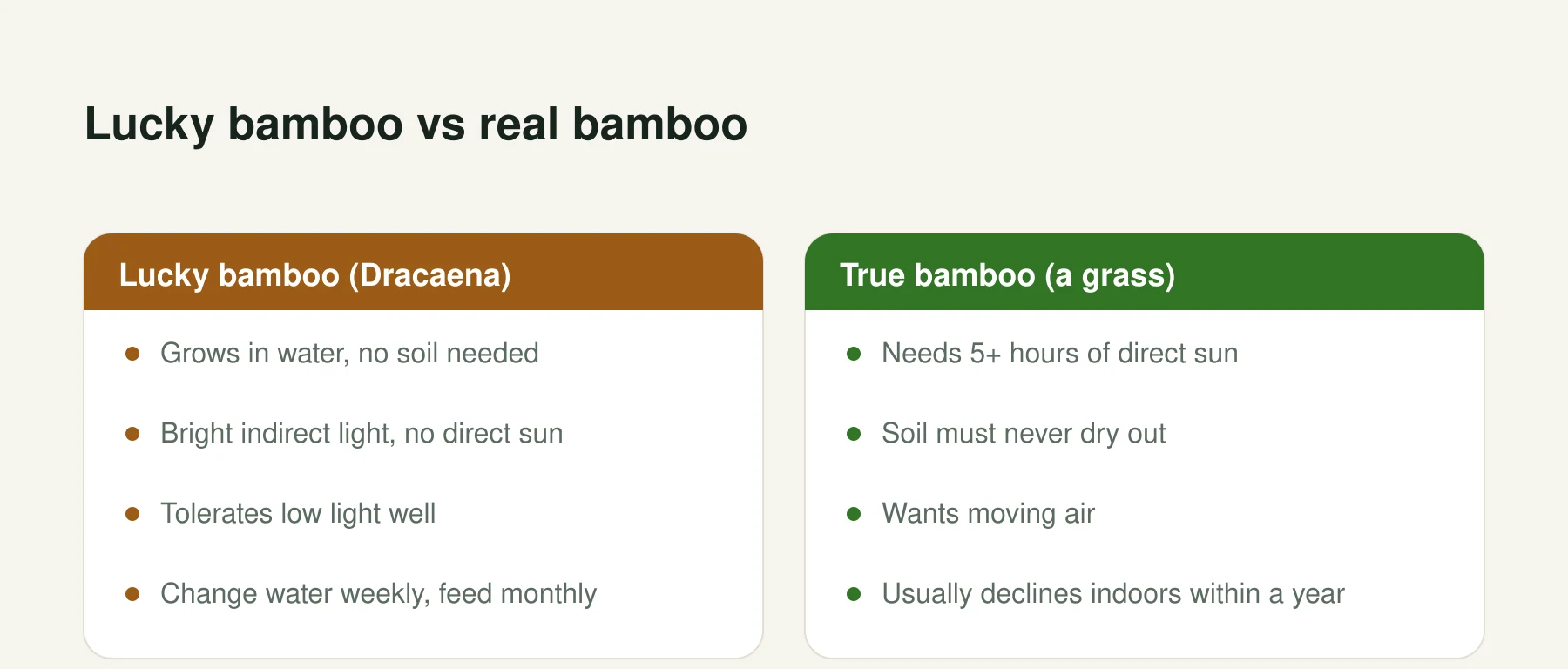
Real bamboo is difficult inside, and it is worth being clear why: it is a grass adapted to open ground with full sun, constant moisture and moving air. Indoors it usually declines over six to twelve months — dropping leaves, browning at the tips and eventually thinning out. If you want to try, these are the species with the best chance.
| Species | Height indoors | Requirements |
|---|---|---|
| Pogonatherum paniceum (baby panda bamboo) | 30–45 cm | The most realistic indoor choice; bright light, soil always moist |
| Bambusa multiplex (hedge bamboo) | 1–2 m | Needs 5+ hours of direct sun; large pot |
| Bambusa ventricosa (Buddha belly) | 1–2 m | Bright direct light; tolerates pot culture well |
| Chamaedorea seifrizii (bamboo palm) | 1–2 m | Not bamboo at all — a palm, and far easier indoors |
#Growing lucky bamboo in soil
Lucky bamboo grown in soil is larger, sturdier and longer-lived than the same plant in water, and it is worth moving established stalks over. Use a well-draining potting mix, keep the soil lightly moist but never waterlogged, and give it the same bright indirect light. Plants moved from water to soil often sulk for a few weeks while they grow soil-adapted roots — keep the mix damper than usual during that transition, then settle into normal watering.
For the symbolism and placement of bamboo in the home, see our guides to lucky indoor plants and feng shui indoor plants.
Frequently asked questions
Is lucky bamboo a real bamboo plant?
No. Lucky bamboo is Dracaena sanderiana, a West African member of the asparagus family. It looks like bamboo but is unrelated, which is why it grows in a vase of water and tolerates low light — things real bamboo cannot do.
Why is my lucky bamboo turning yellow?
Most often fluoride or chlorine in tap water, or stale water that has not been changed. Direct sun also yellows stalks. Switch to filtered or distilled water, change it weekly, and move the plant out of direct light.
How often should I change the water in lucky bamboo?
Every week, rinsing the pebbles at the same time. Water left standing loses its dissolved oxygen and accumulates waste compounds, which causes cloudy water, slimy roots and yellow stalks.
Can bamboo be grown indoors?
True bamboo is difficult indoors because it needs full sun, constantly moist soil and moving air. Pogonatherum paniceum is the most realistic small option. For a tall bamboo look, the bamboo palm (Chamaedorea seifrizii) is far easier and tolerates indoor light.
How many lucky bamboo stalks are lucky?
Three stalks for happiness, long life and wealth is the classic arrangement; eight represents wealth and nine great fortune. Four stalks are avoided because the word resembles the word for death in Chinese.
Sources and further reading
- Houseplants: plant profiles — Royal Horticultural Society. Species-level profiles and cultivation notes.
- Plant Finder — Missouri Botanical Garden. Botanical names, native range and cultural requirements.
- North Carolina Extension Gardener Plant Toolbox — NC State Extension. Species data, hardiness and toxicity cross-checks.
- Toxic and Non-Toxic Plants List — ASPCA Animal Poison Control. Toxicity status of every plant named, checked under its botanical name.
Related guides
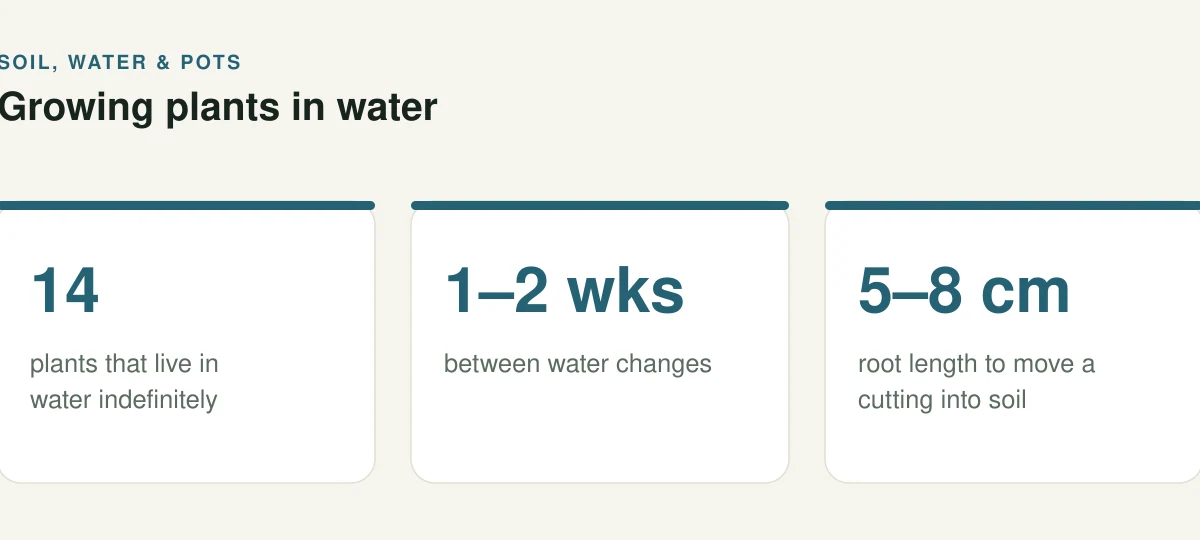
Indoor Water Plants: 14 That Grow in Water Without Any Soil
Which indoor plants grow permanently in water, how to set up a bottle or vase properly, and the feeding and water-change routine that stops them stalling.
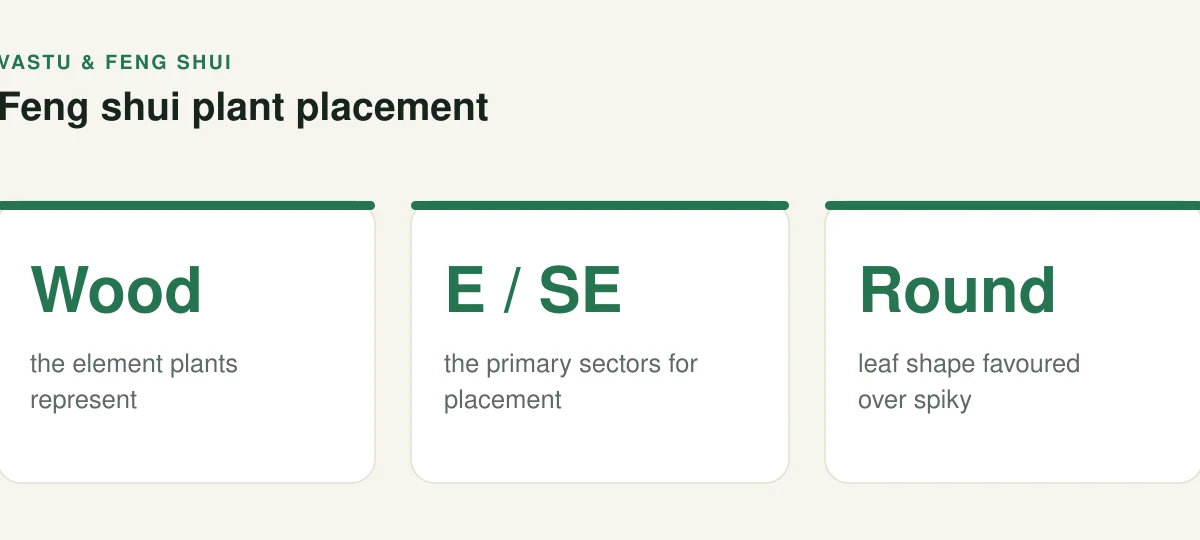
Feng Shui Indoor Plants: Placement, Shape and Positive Energy
How feng shui uses plants to move energy through a home — which shapes and species to choose, where the wood element belongs, and what to keep out of the bedroom.
Lucky Indoor Plants: 12 Plants for Good Luck and Where to Put Them
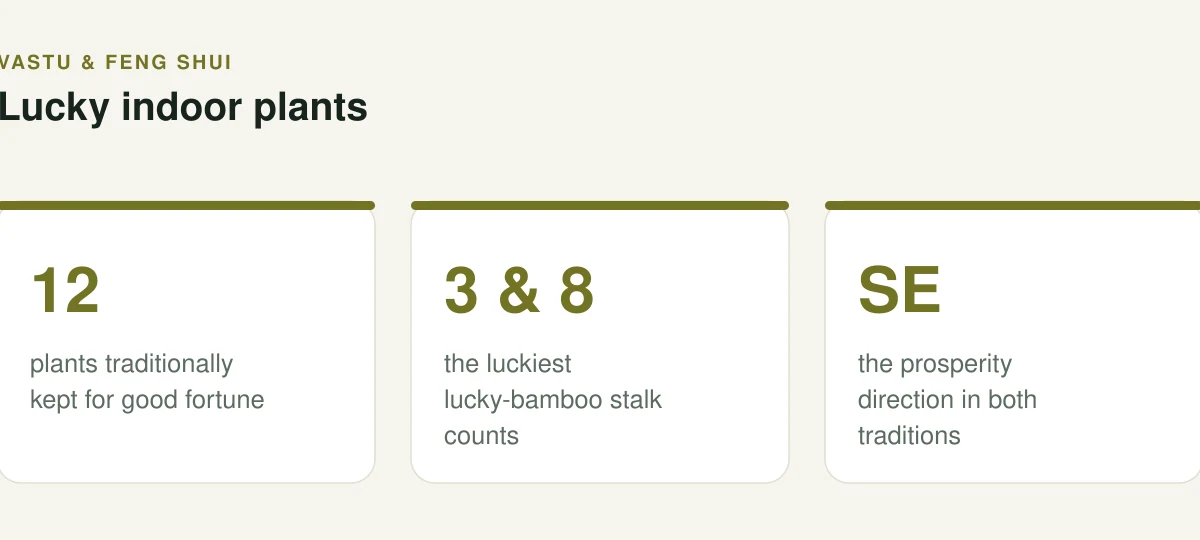
The 12 plants traditionally kept for good luck and prosperity — money plant, lucky bamboo, jade, tulsi and more — with the placement each tradition recommends.