Indoor Water Plants: 14 That Grow in Water Without Any Soil
Which indoor plants grow permanently in water, how to set up a bottle or vase properly, and the feeding and water-change routine that stops them stalling.
The short answer
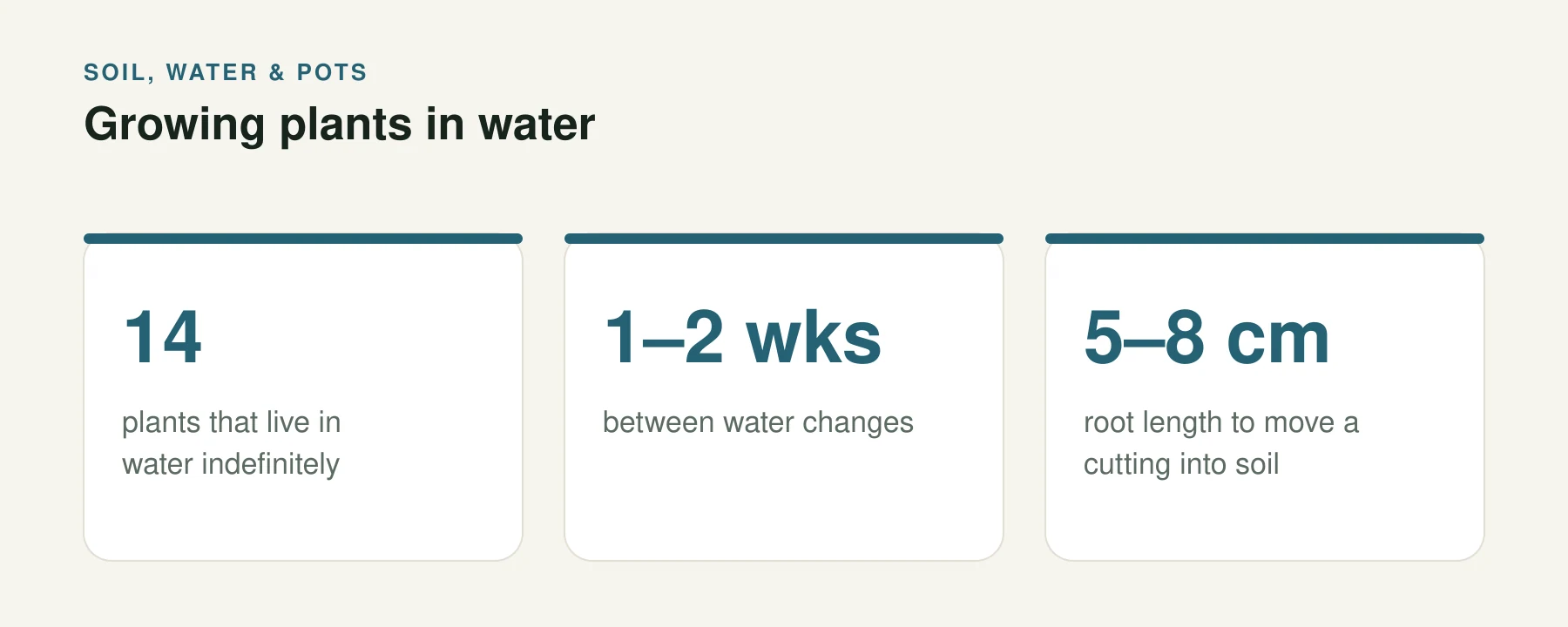
- Money plant, lucky bamboo, philodendron, syngonium and spider plants grow permanently in water.
- Change the water every one to two weeks and keep only the roots submerged.
- Water holds almost no nutrients, so feed a few drops of dilute fertiliser monthly.
Key takeaways
- Plants in water grow more slowly and with smaller leaves than the same plant in soil — that is normal, not a fault.
- Water contains almost no nutrients, so a permanent water plant slowly starves without monthly feeding.
- Only the roots go under; any submerged leaf rots and fouls the water.
- Change the water every one to two weeks — stale water lacks the dissolved oxygen roots need.
Growing plants in water removes the two things that kill most houseplants: overwatering and bad soil. It also removes the nutrients, which is the part nobody mentions — a bottle of tap water is essentially an empty growing medium. So when a water-grown plant looks perfect for six months and then simply stops, it has usually run out of food rather than developed a disease. That one realisation fixes most stalled bottle plants.
#14 plants that grow permanently in water
| Plant | Botanical name | Light | Speed in water |
|---|---|---|---|
| Money plant / pothos | Epipremnum aureum | Low to bright indirect | Fast |
| Lucky bamboo | Dracaena sanderiana | Bright indirect | Slow |
| Heartleaf philodendron | Philodendron hederaceum | Low to bright indirect | Fast |
| Syngonium | Syngonium podophyllum | Moderate indirect | Fast |
| Spider plant | Chlorophytum comosum | Moderate to bright | Moderate |
| Wandering dude | Tradescantia zebrina | Bright indirect | Very fast |
| Chinese evergreen | Aglaonema | Low to moderate | Slow |
| Peace lily | Spathiphyllum | Moderate indirect | Moderate |
| English ivy | Hedera helix | Moderate to bright | Moderate |
| Coleus | Plectranthus scutellarioides | Bright indirect | Fast |
| Begonia | Begonia species | Bright indirect | Moderate |
| Arrowhead vine | Syngonium 'Pink' | Moderate indirect | Fast |
| Dumb cane | Dieffenbachia | Moderate indirect | Slow |
| Impatiens | Impatiens walleriana | Bright indirect | Fast |
#Setting up a water-grown plant
Take a cutting below a node
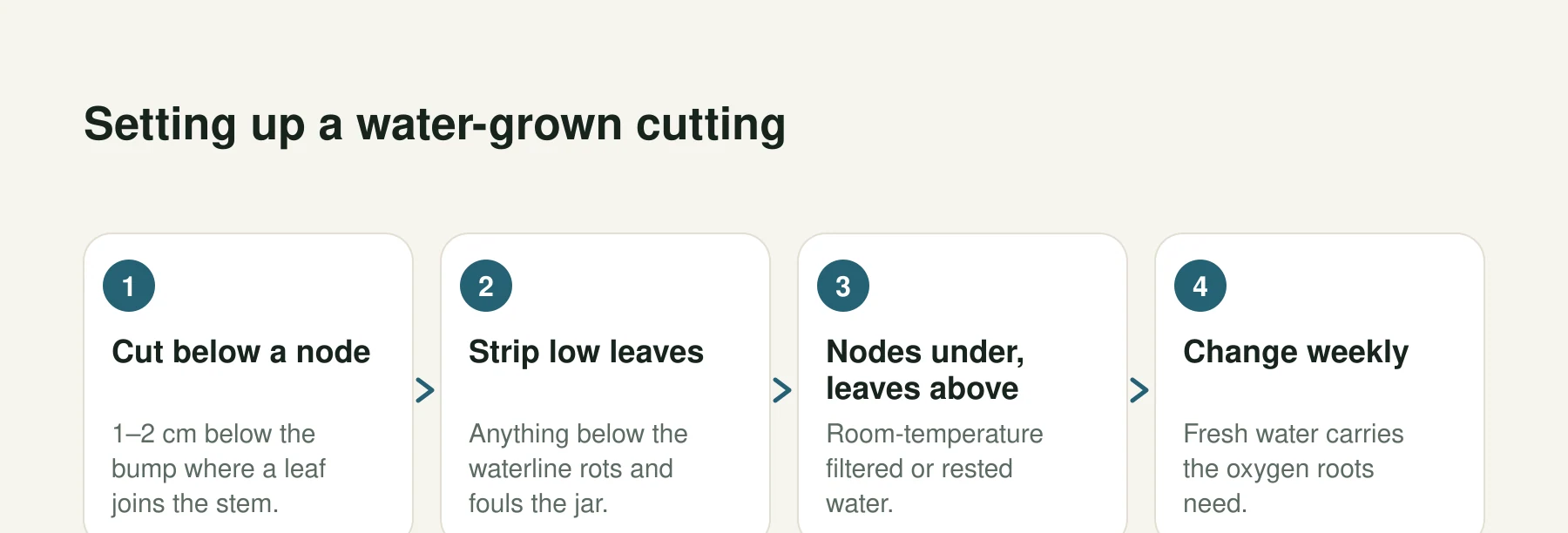
Cut 1–2 cm below a node — the small bump where a leaf joins the stem. Only the node produces roots, so a cutting without one will never root, however healthy the leaf looks.
Strip the lower leaves
Remove every leaf that would sit below the waterline. Submerged leaves rot within days and turn the water cloudy, which is the most common reason cuttings fail.
Choose the container
Clear glass lets you watch the roots and spot cloudy water early. Coloured or opaque glass slows algae growth. Either works — pick based on which problem bothers you more.
Use the right water
Room-temperature filtered or rested tap water. If your supply is fluoridated, use filtered or rainwater for sensitive species such as lucky bamboo, spider plant and dracaena.
Position in indirect light
Direct sun heats the water, grows algae and cooks the roots. Bright indirect light is the target for almost all of these.
#The maintenance routine
- Change the water every 1–2 weeks. Fresh water carries dissolved oxygen, which roots need as much as they need moisture.
- Rinse the roots and container at each change to remove the slippery biofilm that builds up on glass and roots.
- Feed monthly with 2–3 drops of liquid fertiliser at quarter strength, or use a dedicated hydroponic nutrient. This is the step that separates a thriving water plant from a slowly declining one.
- Top up between changes as water evaporates, keeping the roots covered and the stem base above the surface.
- Add pebbles or glass beads for support if the plant is top-heavy — they also keep stems upright without soil.
#Common problems
| Problem | Cause | Fix |
|---|---|---|
| Cloudy, smelly water | Decaying leaf or infrequent changes | Remove submerged leaves; change water weekly |
| Green algae on the glass | Too much light on the container | Move out of direct sun or use opaque glass |
| Slimy brown roots | Bacterial rot in stale water | Trim affected roots, rinse, change water more often |
| Yellow leaves after months | Nutrient depletion | Start monthly dilute feeding |
| No growth at all | Too little light or no nutrients | Move brighter and begin feeding |
| Wilting after moving to soil | Water roots struggling to adapt | Keep soil damp for two weeks; cover loosely to raise humidity |
#Moving a water plant into soil
The longer a plant has lived in water, the harder the switch. Cuttings moved at 5–8 cm of root length settle in easily. A plant that has been in water for a year will usually wilt and shed most of those roots before growing soil-adapted replacements. If you want to move one, do it in spring, use a light airy mix, keep it noticeably damper than normal for the first fortnight, and expect a few weeks of sulking.
Frequently asked questions
Which indoor plants can grow in water?
Money plant, lucky bamboo, philodendron, syngonium, spider plant, wandering dude, Chinese evergreen, peace lily, English ivy and coleus all grow permanently in water. Most trailing aroids will do the same.
How often should I change the water for plants grown in water?
Every one to two weeks, rinsing the roots and container at the same time. Standing water loses its dissolved oxygen and builds up waste compounds, which causes slimy roots and yellowing leaves.
Do plants growing in water need fertiliser?
Yes. Tap water contains almost no plant nutrients, so a water-grown plant slowly starves without feeding. Add two or three drops of liquid fertiliser at quarter strength once a month.
Why is my water plant not growing?
Usually a lack of nutrients or light. Water contains no meaningful food, and a plant in a dim corner has no energy to grow. Start monthly dilute feeding and move it to bright indirect light.
Can I move a plant from water to soil?
Yes, but the earlier the better. Cuttings with 5–8 cm of roots transition easily; plants that have lived in water for months often lose most of those roots and take weeks to recover. Keep the soil damp for the first two weeks after moving.
Sources and further reading
- Houseplants: plant profiles — Royal Horticultural Society. Species-level profiles and cultivation notes.
- Houseplants growing guide — Royal Horticultural Society. Potting, feeding and seasonal care practice.
- Plant Finder — Missouri Botanical Garden. Botanical names, native range and cultural requirements.
- Toxic and Non-Toxic Plants List — ASPCA Animal Poison Control. Toxicity status of every plant named, checked under its botanical name.
Related guides
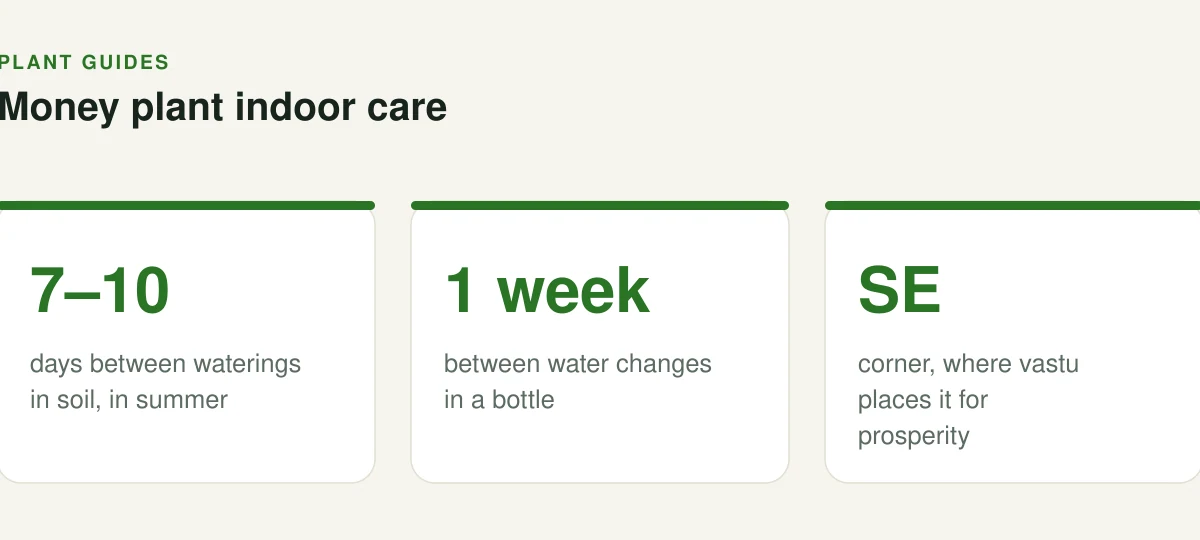
Money Plant Indoor Care: Water, Light, Vastu and Growing It in a Bottle
How to grow a money plant indoors — in soil or water — plus where vastu says to place it, why leaves turn yellow, and how to make a leggy vine bushy again.
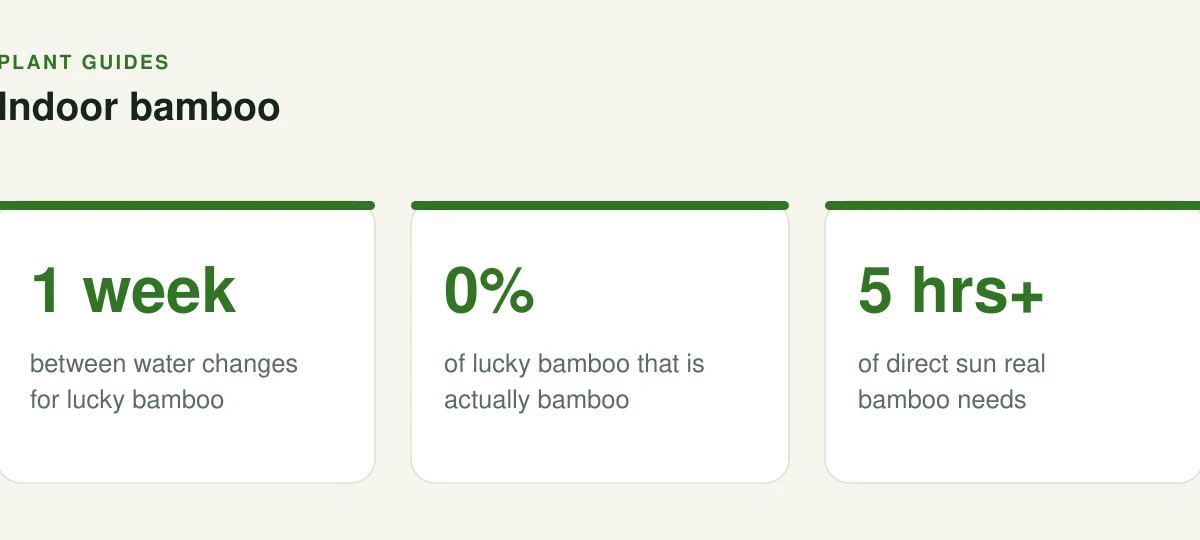
Indoor Bamboo Plant Care: Lucky Bamboo, Real Bamboo and the Difference
Lucky bamboo is not bamboo. Here is how to care for each type indoors, why stalks turn yellow, how many stalks to keep, and which true bamboos survive inside.
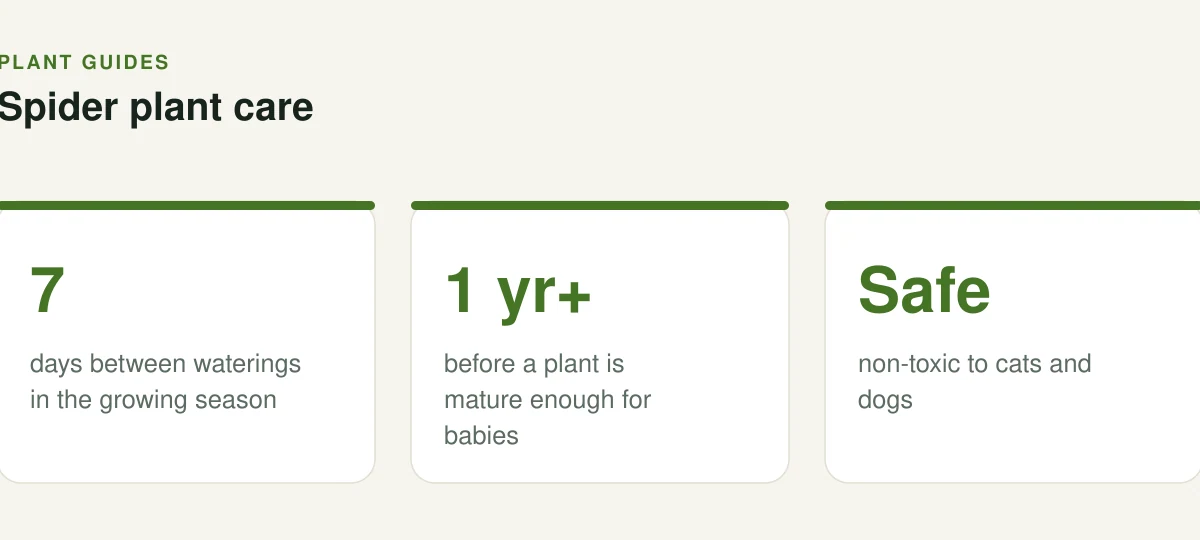
Spider Plant Indoor Care: Brown Tips, Babies and Why It's the Best Beginner Plant
How to grow a spider plant indoors, why the leaf tips go brown, how to root the plantlets, and how to get an established plant to produce babies.