Indoor Cactus Plants and Succulents: Care Without Killing Them
Why indoor cacti stretch, rot and fail — and the watering, light and soil regime that keeps desert and jungle cacti healthy in a house.
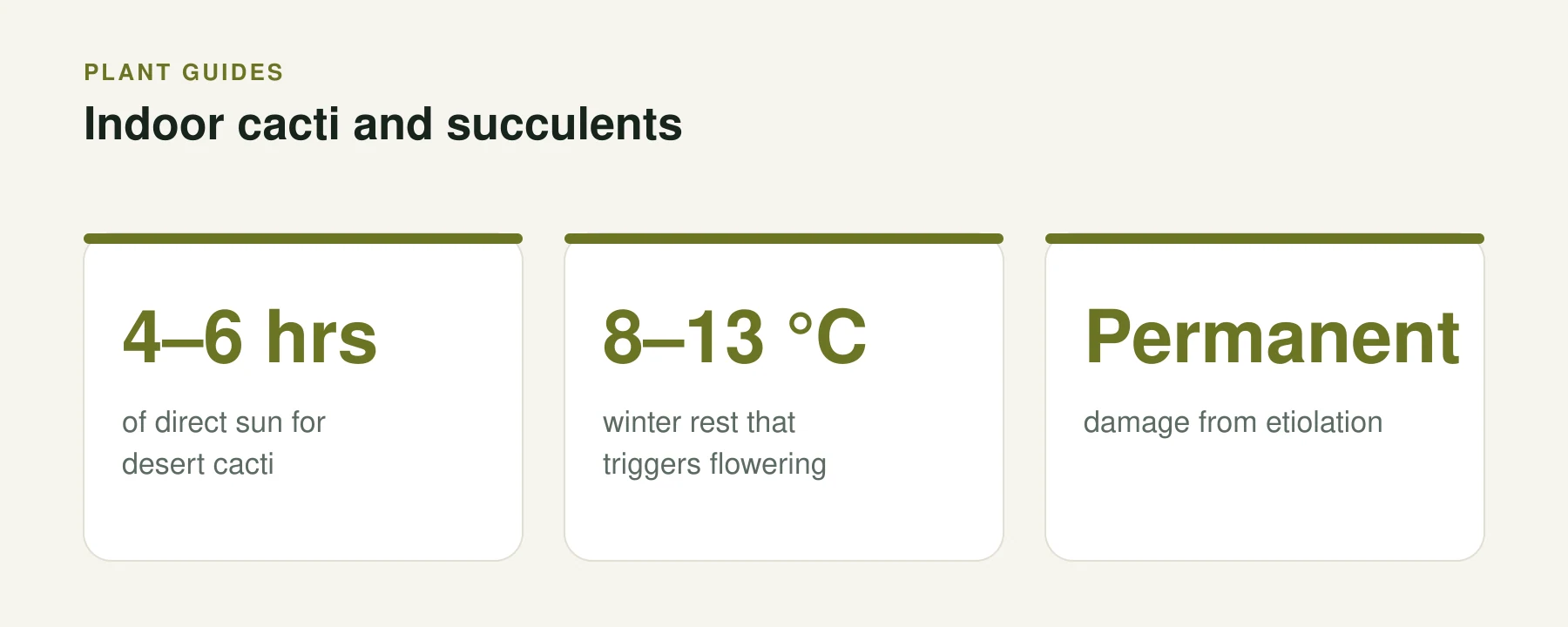
The short answer
- Desert cacti need the sunniest window you have — four to six hours of direct sun.
- Water every 2–3 weeks in summer and almost never from November to February.
- Stretched pale growth is permanent, and soft brown bases mean rot has already started.
Key takeaways
- A winter rest with almost no water is what makes cacti flower — and what most indoor growers skip.
- Etiolation, the thin stretched growth of a light-starved cactus, is permanent and cannot be reversed.
- Jungle cacti such as Christmas cactus have completely different needs from desert cacti.
- Terracotta and gritty mix together give the widest margin against rot.
Cacti have a reputation as the easiest plants you can buy, which is precisely why so many of them die. They are easy outdoors, in a dry climate, in full sun. Indoors — behind glass that filters much of the useful light, in a house heated all winter — you are asking them to do something fairly unnatural. And the two things they need most, strong light and a proper dry winter, are the two things almost everyone gets wrong.
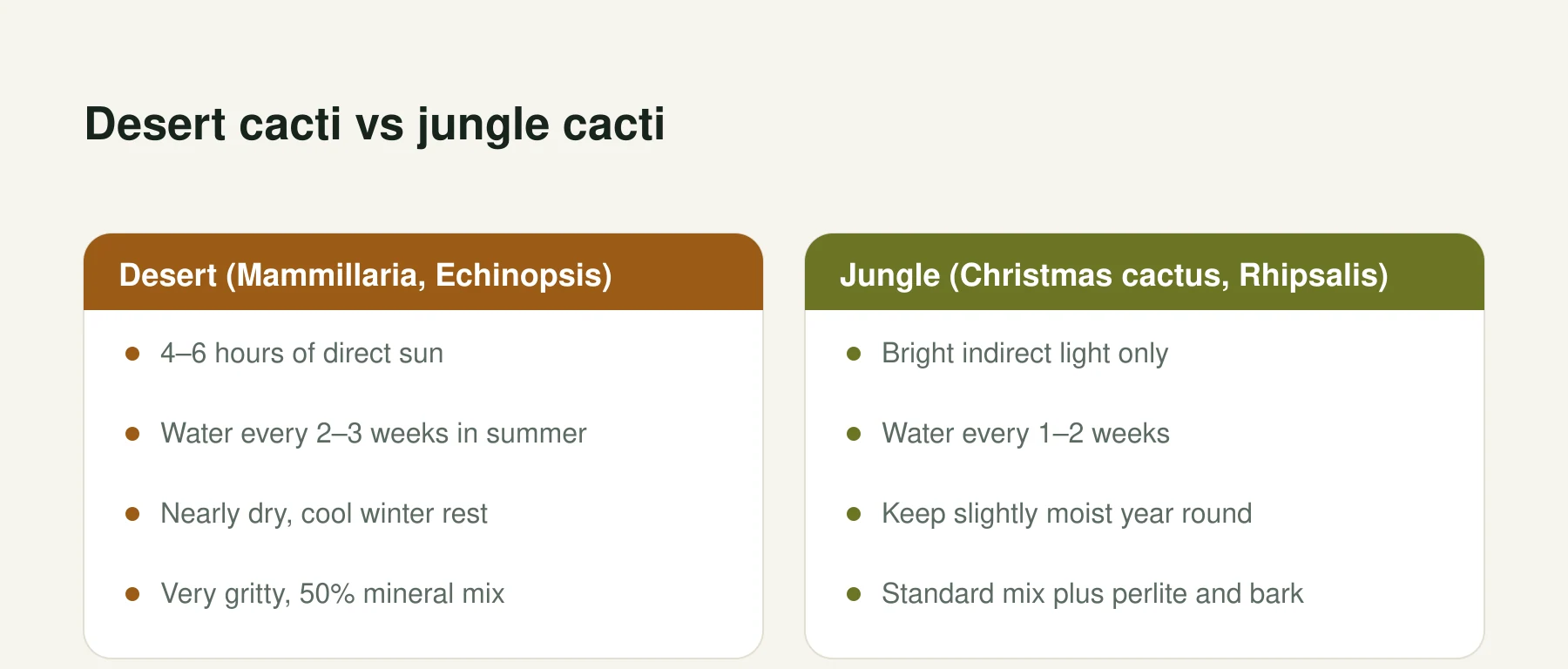
#Desert cacti versus jungle cacti
| Desert cacti | Jungle cacti | |
|---|---|---|
| Examples | Mammillaria, Echinopsis, Opuntia, Ferocactus | Christmas cactus, Easter cactus, Rhipsalis |
| Origin | Arid scrub, full sun | Rainforest branches, dappled shade |
| Light | Direct sun, 4–6 hours | Bright indirect only |
| Water in summer | Every 2–3 weeks, soak and dry | Every 1–2 weeks, evenly moist |
| Winter | Nearly dry, 8–13 °C | Reduce, keep slightly moist |
| Mix | Very gritty, 50% mineral | Standard mix plus perlite and bark |
Almost every problem with a Christmas cactus comes from treating it like a desert plant. It is an epiphyte from Brazilian rainforest branches, and it wants shade, humidity and regular water.
#Light: the non-negotiable part
Desert cacti need the brightest position in the home — a south or west facing windowsill with four to six hours of direct sun. Anything less and the plant etiolates: the new growth comes through pale, thin and stretched, reaching toward the light source. This is permanent. The stretched section never thickens up, and a badly etiolated cactus is disfigured for life.
#Watering
Soak thoroughly
When you do water, water properly — until it runs from the drainage hole. Cacti evolved for infrequent heavy rain, not light sprinkling.
Then let it dry completely
Wait until the mix is dry all the way through, which in summer is roughly every two to three weeks in a bright room.
Stop almost entirely in winter
From November to February, water once a month at most — and for desert cacti in a cool room, not at all. This dry rest is what triggers flowering in spring.
Never leave water in the saucer
Standing water at the base is the fastest route to rot in a plant with no tolerance for it.
Judge by the plant
A thirsty cactus looks slightly shrunken or wrinkled and the pot is light. A rotting one goes soft and brown at the base — and by then it is usually too late.
#Aloe vera indoors
Aloe is the most commonly kept indoor succulent and follows desert cactus rules: bright light, gritty mix, water every two to three weeks in summer and monthly in winter. Two specific points. First, it must have a drainage hole — aloe in a sealed decorative pot rots reliably. Second, leaves that flop outward and go pale mean too little light, while leaves that turn reddish-brown mean strong sun, which is stress but not harmful. Harvest gel from the outermost, oldest leaves, cutting at the base.
#Soil and pots
- Mix: 2 parts potting soil, 2 parts coarse sand or pumice, 1 part perlite. It should feel gritty and dry within days.
- Terracotta is genuinely better here — its porosity pulls moisture from the mix and buys you a margin for error.
- Shallow pots suit most cacti, which have shallow spreading root systems rather than deep ones.
- A top dressing of grit looks right, keeps the stem base dry, and discourages fungus gnats.
- Repot every 3–4 years at most, in spring, using thick gloves or folded newspaper to handle spiny plants.
#Getting cacti to flower
Most indoor cacti never flower because they never get a winter. In habitat, a cool, dry dormancy is what sets flower buds for spring. To reproduce it: from November to February keep the plant at 8–13 °C — an unheated spare room, porch or bright windowsill behind a closed curtain — and give it almost no water. Resume normal watering in March and many species flower within weeks. A cactus kept warm and watered all winter grows soft, pale, out-of-season growth and rarely blooms.
Frequently asked questions
How often should I water an indoor cactus?
Every two to three weeks in summer, soaking thoroughly and then letting the mix dry out completely. From November to February water monthly at most, and not at all for desert cacti kept in a cool room.
Why is my cactus growing tall and thin?
This is etiolation, caused by insufficient light. The plant stretches toward the nearest light source, producing pale, narrow growth. It is permanent — move the plant to a sunnier position so that future growth is normal.
Can cactus plants grow indoors without direct sunlight?
Desert cacti cannot — they need four to six hours of direct sun and will stretch and weaken without it. Jungle cacti such as Christmas cactus and rhipsalis do well in bright indirect light and are the better choice for a room without a sunny window.
Why is my cactus going soft and brown at the base?
Root and stem rot from overwatering, or from water sitting in the saucer. Cut away all soft tissue with a clean blade, let the healthy section callus in the air for several days, then replant it in dry gritty mix and do not water for a week.
Is aloe vera a good indoor plant?
Yes, given a bright windowsill and a pot with drainage. Water every two to three weeks in summer and monthly in winter. Pale, floppy leaves mean too little light; reddish-brown leaves mean strong sun, which is stress but not harmful.
Sources and further reading
- Houseplants: plant profiles — Royal Horticultural Society. Species-level profiles and cultivation notes.
- Plant Finder — Missouri Botanical Garden. Botanical names, native range and cultural requirements.
- North Carolina Extension Gardener Plant Toolbox — NC State Extension. Species data, hardiness and toxicity cross-checks.
- Toxic and Non-Toxic Plants List — ASPCA Animal Poison Control. Toxicity status of every plant named, checked under its botanical name.
Related guides
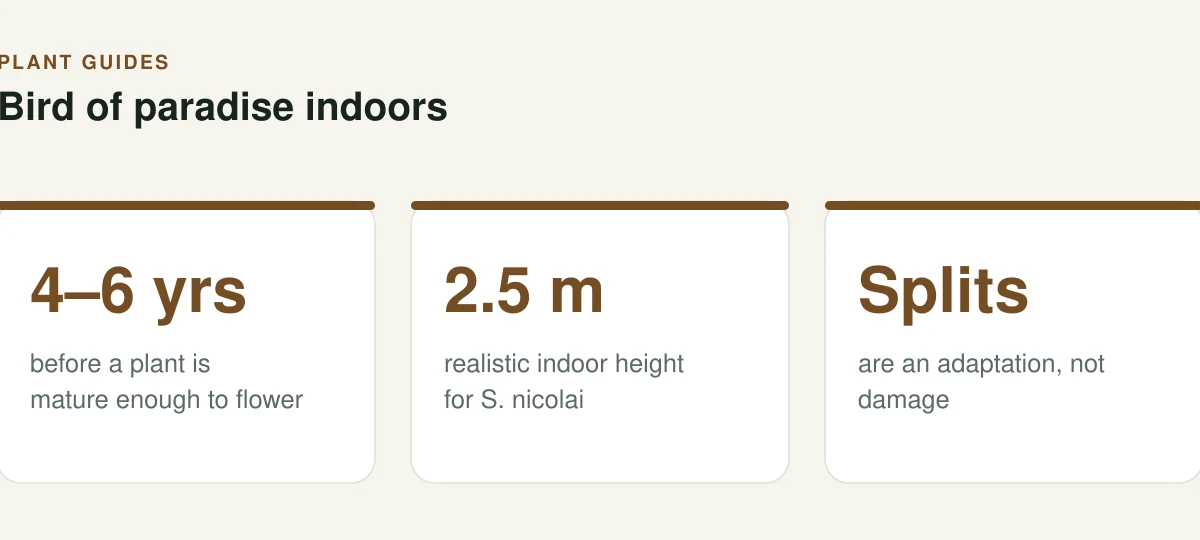
Bird of Paradise Indoor Plant Care (and Why Yours Won't Flower)
Strelitzia care indoors: the light it needs, how often to water, why the leaves split, and the honest answer on getting a bird of paradise to flower in a house.
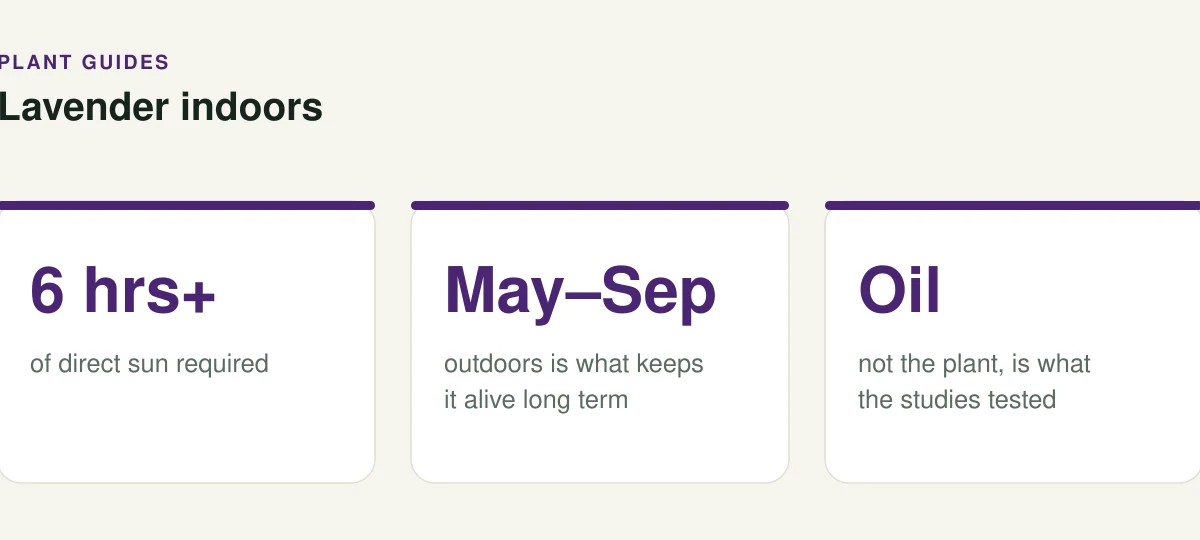
Indoor Lavender Plant: Benefits, Care and Why It's Hard Indoors
Lavender is a Mediterranean sun plant, which makes it genuinely difficult indoors. Here is what it needs, which variety to choose, and the honest benefits.
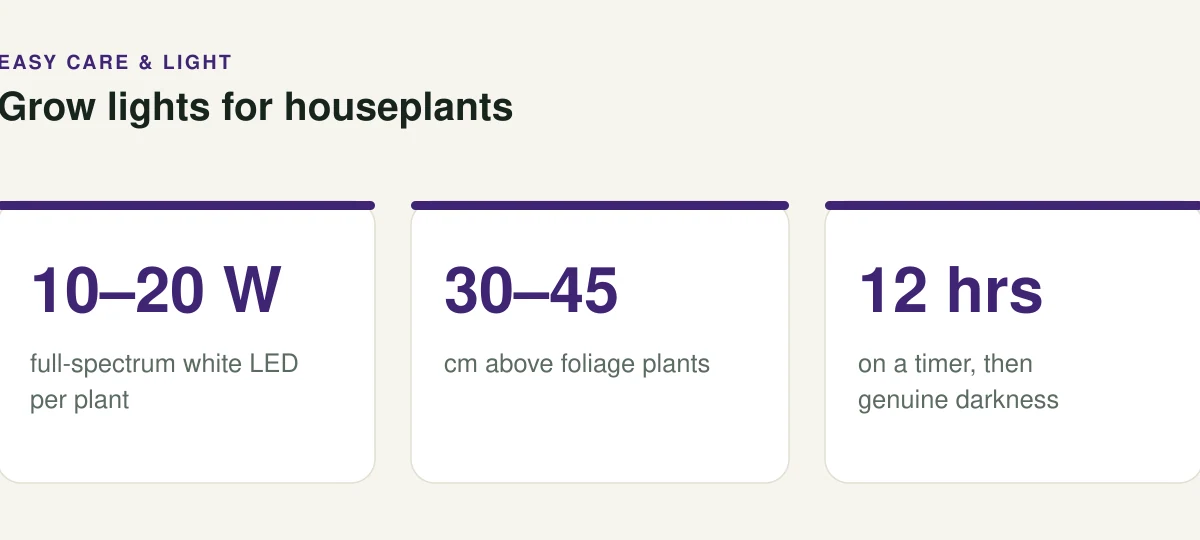
Grow Lights for Indoor Plants: What to Buy and How to Use One
How to choose a grow light for houseplants — wattage, spectrum, distance and run time — and why an ordinary full-spectrum LED bulb is usually enough.