Indoor Plant Pots: Choosing Size, Material and Drainage
How pot material and size change how often you water, why decorative pots without drainage kill plants, and how to use cachepots properly.
The short answer
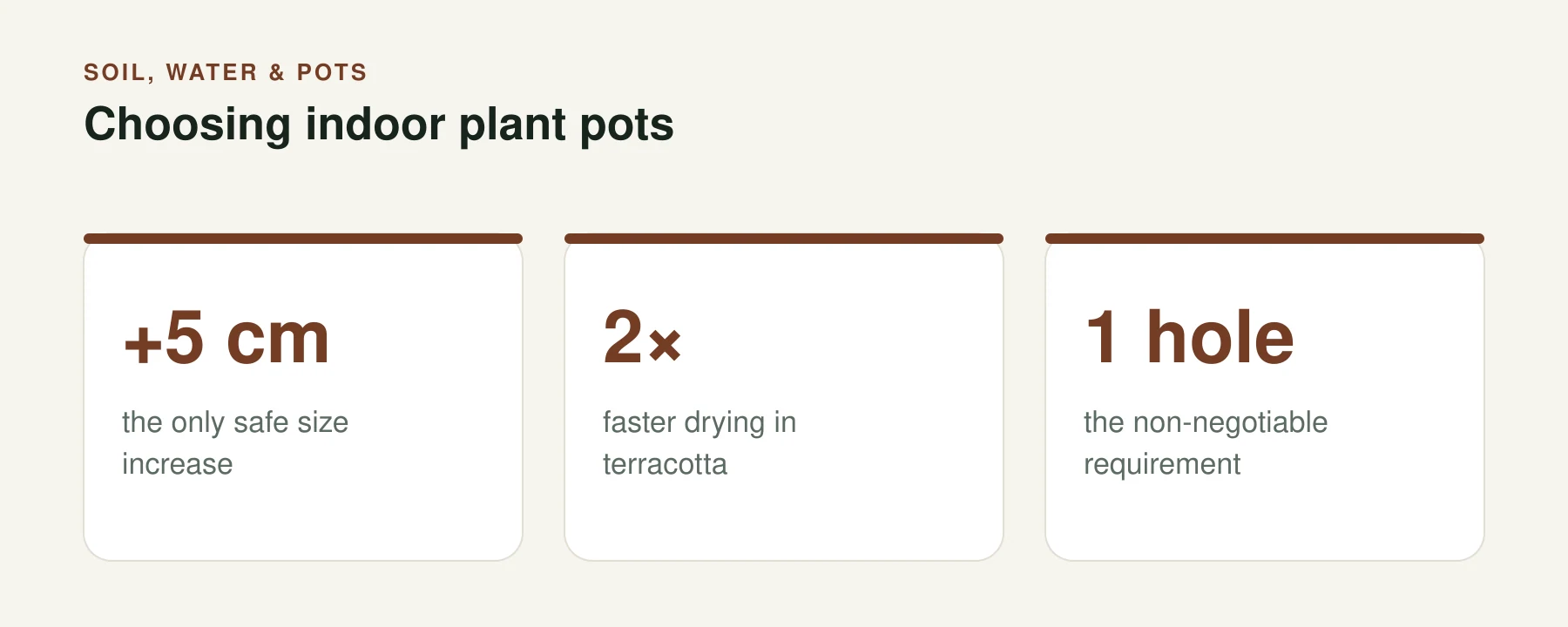
- Go up one pot size only — about 5 cm wider than the current one.
- A pot without a drainage hole is an outer cover, not a planter.
- Terracotta dries roughly twice as fast as glazed ceramic or plastic of the same size.
Key takeaways
- Pot size changes watering frequency more than any other single factor.
- A pot without a drainage hole is an outer cover, not a planter.
- Terracotta dries roughly twice as fast as glazed ceramic or plastic of the same size.
- Going up more than one size at a time is the most common repotting mistake.
Pots get chosen on looks and treated as a decorating decision. They are really a horticultural one. Material and size together decide how long the soil stays wet, and that single variable sits behind most houseplant deaths. The upside is that a pot is a one-off choice: get it right and you make watering easier for yourself for years without thinking about it again.
#Materials and how they behave
| Material | Dries | Weight | Best for |
|---|---|---|---|
| Terracotta (unglazed) | Fast — porous walls wick moisture | Medium | Succulents, cacti, snake plants, jade, chronic overwaterers |
| Glazed ceramic | Slow — non-porous | Heavy | Tropicals, ferns, top-heavy plants needing stability |
| Plastic nursery pot | Slow | Light | Ferns, calatheas, and dropping inside decorative covers |
| Concrete | Medium | Very heavy | Large floor plants that need to stay put |
| Metal | Slow, and heats up | Medium | Cover pots only — avoid direct planting |
| Woven basket | Fast, and leaks | Light | Cover pots with a waterproof liner |
| Self-watering planter | Very slow | Medium | Offices, frequent travellers, thirsty plants |
#Getting the size right
One size up — about 5 cm wider in diameter than the current pot. This is the rule people break most often, usually with good intentions: a much larger pot seems like it will save repotting later. Instead it holds a volume of wet soil the small root system cannot draw water from, and that permanently damp zone around the roots is the leading cause of root rot after repotting.
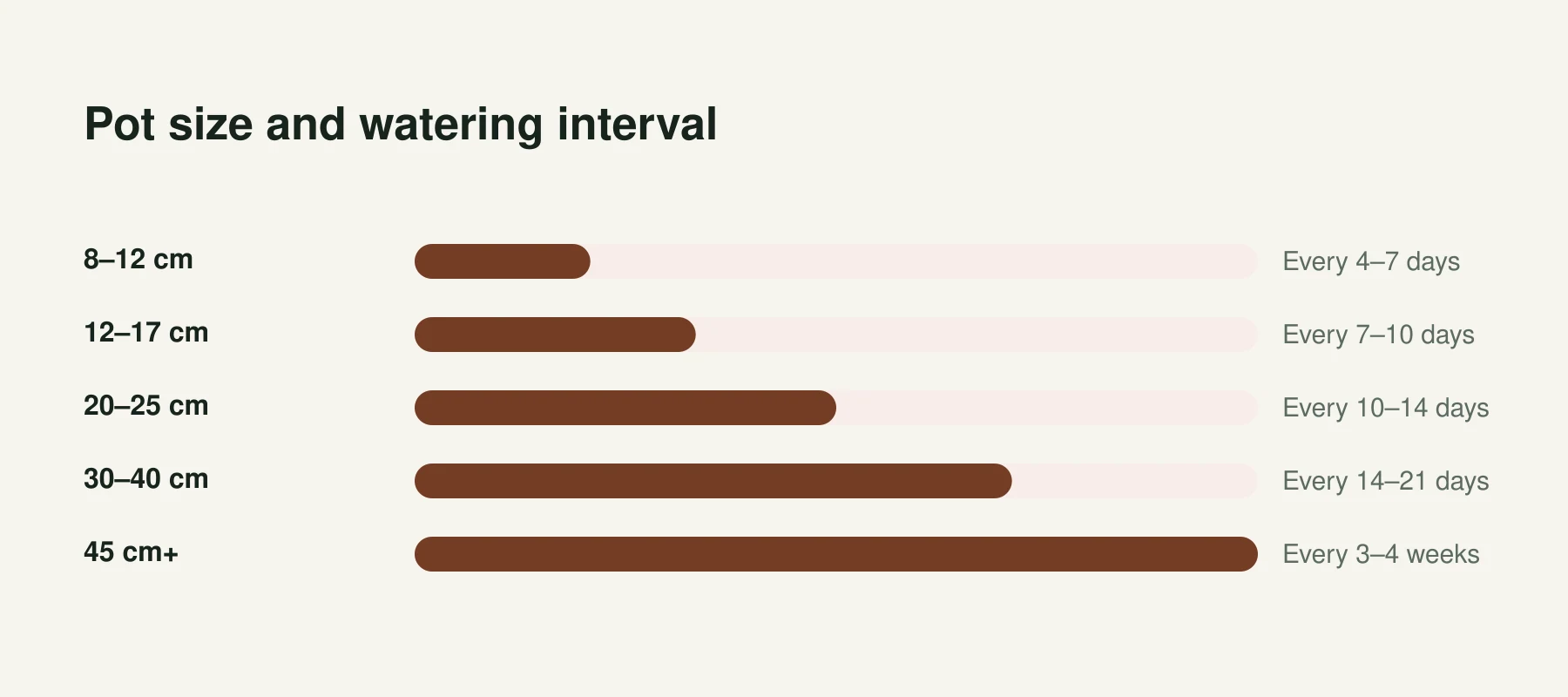
| Plant size | Pot diameter | Approx. watering interval* |
|---|---|---|
| Cutting or small desk plant | 8–12 cm | Every 4–7 days |
| Standard shelf plant | 12–17 cm | Every 7–10 days |
| Large tabletop plant | 20–25 cm | Every 10–14 days |
| Floor plant | 30–40 cm | Every 14–21 days |
| Large specimen tree | 45 cm+ | Every 3–4 weeks |
*For a moderately thirsty plant in bright indirect light. The pattern is what matters: doubling the pot diameter roughly doubles or triples the interval between waterings.
#Drainage: the thing that actually matters
A pot needs a hole. Without one, excess water collects invisibly at the base, the lowest roots sit permanently submerged, and the plant declines over weeks with no obvious cause — the single most common way beautiful decorative pots kill plants.
Use the nursery pot inside the pretty one
Keep the plant in a plastic pot with drainage and drop it inside the decorative cover. You get proper drainage plus the look, and you can lift the inner pot to judge its weight.
Check the cover after watering
Tip out any water that collects in the outer pot ten minutes after watering. A hidden reservoir at the bottom of a cachepot is invisible and lethal.
Raise the inner pot
A few pebbles or an upturned saucer in the base of the cover keeps the nursery pot clear of any runoff.
Or drill the pot
Ceramic and terracotta can be drilled with a diamond-tipped bit, wet, at low speed. Straightforward, but there is a real chance of cracking the pot.
Never add a gravel layer instead
Gravel in the base does not substitute for a hole. It raises the saturated zone closer to the roots rather than improving drainage.
#Practical notes for large pots
- Fit castors before filling. A 40 cm pot of moist soil can weigh 25 kg or more, and you will want to move it.
- Large ceramic pots crack in cold rooms if soil freezes — relevant for conservatories and porches in winter.
- Consider a lightweight liner for very large decorative pots: fill the lower third with an upturned plastic pot to reduce soil volume and weight.
- Match pot to plant weight. Tall plants such as bird of paradise, dracaena and yucca need a heavy base or they will tip.
- Wide and shallow suits cacti and succulents, which root shallowly; deep pots hold wet soil below their roots.
#Styling without hurting the plants
A consistent pot colour or material across different plant heights reads as deliberate; a mix of pots at matching heights just reads as clutter. White and unglazed terracotta are the two most forgiving choices in most interiors. If you want a matching set, buy them as outer covers in a range of sizes — then you can swap plants, repot and replace anything that dies without the pots ever becoming the constraint. Our potting mix guide covers what to fill them with.
Frequently asked questions
What size pot should I use for an indoor plant?
One size up from the current pot — about 5 cm wider in diameter. A much larger pot holds wet soil the roots cannot reach, which stays soggy and causes root rot. Repot again when roots emerge from the drainage holes.
Do indoor plant pots need drainage holes?
Yes. Without a hole, excess water collects at the base and the lowest roots sit permanently submerged. If you want to use a decorative pot with no hole, keep the plant in a nursery pot inside it and empty any water that collects.
Are terracotta pots better for indoor plants?
For plants that dislike wet feet — succulents, cacti, snake plants, jade — yes, because the porous walls wick moisture and dry the mix roughly twice as fast. For ferns, calatheas and other moisture-lovers, glazed ceramic or plastic is better.
Can I put rocks in the bottom of a pot instead of drainage holes?
No. A gravel layer raises the perched water table, so the saturated zone sits closer to the roots. It is not a substitute for a drainage hole and can make matters slightly worse.
Why is there white crust on my terracotta pot?
Mineral salts from water and fertiliser drawn through the porous clay. It is harmless to the plant. Scrub it off with a vinegar solution if you want, and flush the pot with plain water occasionally to reduce salt buildup in the soil.
Sources and further reading
- Houseplants growing guide — Royal Horticultural Society. Potting, feeding and seasonal care practice.
- Houseplants — Royal Horticultural Society. General indoor growing guidance, light and watering advice.
- Plant Finder — Missouri Botanical Garden. Botanical names, native range and cultural requirements.
- North Carolina Extension Gardener Plant Toolbox — NC State Extension. Species data, hardiness and toxicity cross-checks.
Related guides
Potting Mix for Indoor Plants: Recipes for Every Plant Type
Why bagged potting soil is too dense for houseplants, what each amendment does, and five mixing recipes for aroids, succulents, ferns, palms and seedlings.
Indoor Hanging Plants: 15 Trailing and Climbing Plants That Thrive
The best indoor hanging plants for baskets, shelves and ceiling hooks — including which cope with the hot, dry air that collects near a ceiling.
Big Leaf Indoor Plants: 14 Large-Leaved Plants for Real Impact
Fourteen big leaf indoor plants — from monstera and elephant ear to banana and rubber plants — with the light, space and pot size each one needs to get large indoors.