Indoor Flowering Plants: 14 That Actually Bloom Inside a House
Most indoor flower plants stop blooming within weeks of coming home. These 14 keep flowering indoors — with the light each one needs to set buds at all.
The short answer
- Flowering costs far more energy than leaves, so blooming indoors is nearly always a light problem.
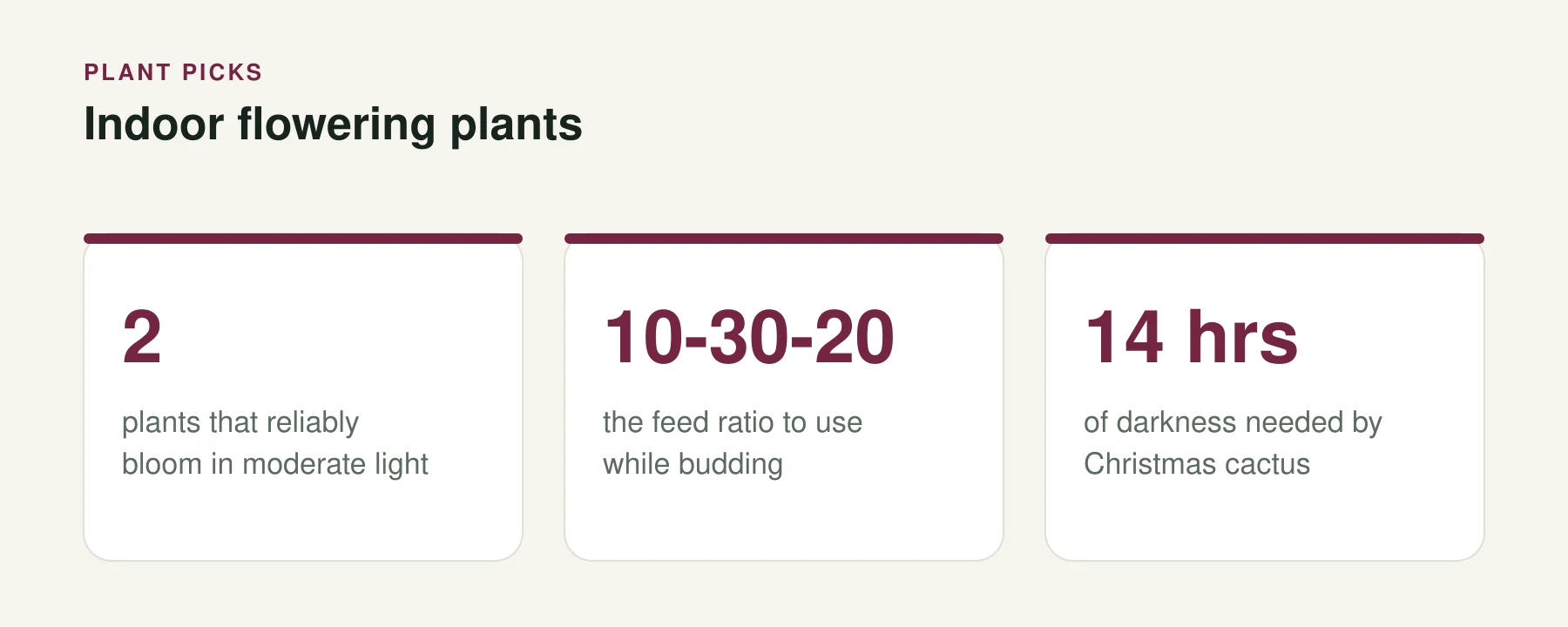
- Peace lily and anthurium flower in moderate light; everything else needs a bright window.
- Switch to a high-phosphorus feed while buds are forming, not a general leaf fertiliser.
Key takeaways
- Flowers cost a plant far more energy than leaves, so blooming indoors is almost always a light problem.
- A plant sold in flower was grown in a nursery at light levels a living room cannot match.
- Feed a flowering plant a higher-phosphorus fertiliser while it is budding, not a general leaf feed.
- Peace lily and anthurium are the only two that bloom reliably in moderate light.
Almost everyone has bought a flowering plant, enjoyed three weeks of blooms, and then kept a perfectly healthy green thing that never flowered again. Nothing went wrong in your care, and it is worth saying that plainly because most people assume it did. Flowering is expensive — a plant only sets buds when it has surplus energy — and a nursery greenhouse provides several times the light of an average living room.
#Flowering plants for moderate light
| Plant | Botanical name | Flowering season | Difficulty |
|---|---|---|---|
| Peace lily | Spathiphyllum wallisii | Spring to autumn, repeatedly | Easy |
| Anthurium | Anthurium andraeanum | Almost year round | Easy |
| African violet | Streptocarpus ionanthus | Year round in good light | Moderate |
| Moth orchid | Phalaenopsis | Once or twice a year, 2–3 months each | Moderate |
| Kalanchoe | Kalanchoe blossfeldiana | Winter to spring | Easy |
| Christmas cactus | Schlumbergera | Late autumn to winter | Easy |
| Streptocarpus | Streptocarpus hybrids | Spring to autumn | Moderate |
#Flowering plants that need real sun
- Hibiscus — spectacular and genuinely repeat-flowering, but needs four or more hours of direct sun.
- Jasmine (Jasminum sambac) — intensely scented, wants a bright windowsill and cool winter nights to set buds.
- Geranium / pelargonium — flowers all summer in a sunny window, tolerates dry soil.
- Begonia — the cane and rex types flower indoors in bright indirect light.
- Gardenia — beautiful, fragrant, and demanding: high humidity, acidic soil, bright light, no draughts.
- Bougainvillea — possible indoors only in a south-facing window and only with dry, hungry treatment.
- Crown of thorns (Euphorbia milii) — the easiest true sun-lover, flowering nearly all year with almost no water.
#Why yours stopped flowering
| Symptom | Cause | What to do |
|---|---|---|
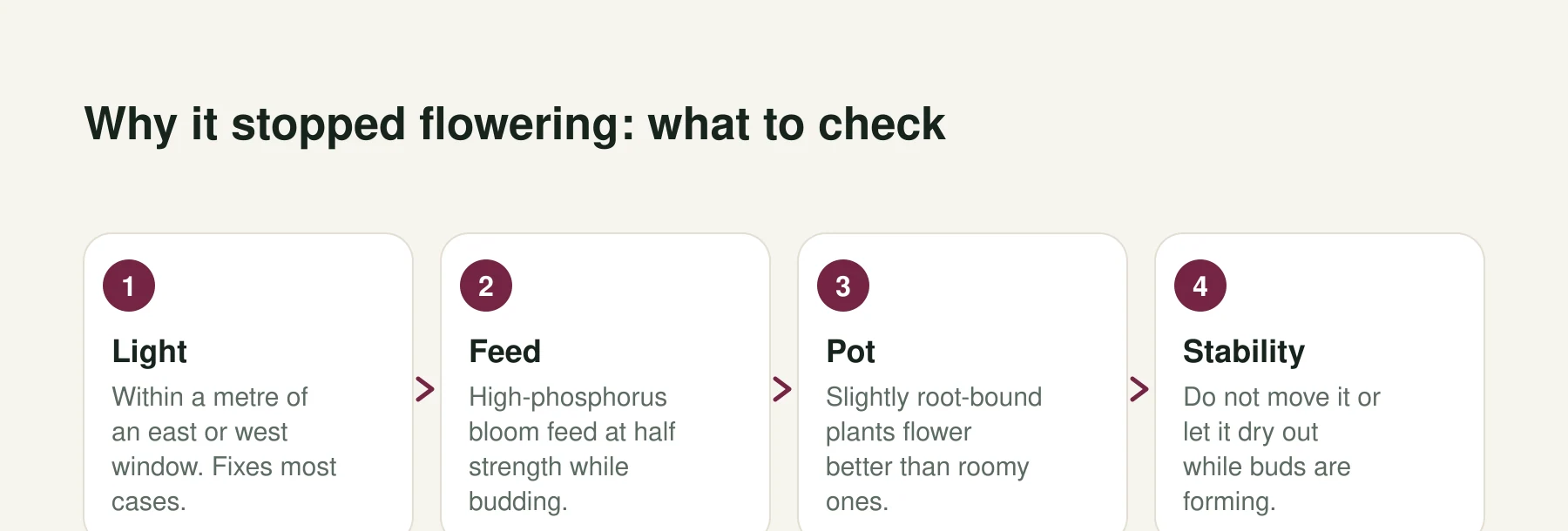
| Healthy leaves, no buds | Not enough light | Move within a metre of an east or west window |
| Buds form then drop | Sudden change: draught, move, or dry soil | Keep position and watering consistent while budding |
| Lush growth, no flowers | Too much nitrogen fertiliser | Switch to a high-phosphorus bloom feed |
| Flowers smaller each cycle | Root-bound or exhausted soil | Repot one size up in spring, then resume feeding |
| Never reflowered after purchase | Nursery light levels not matched at home | Brightest available spot, or add a grow light |
| Christmas cactus won't bloom | Needs long nights to trigger buds | Give 12–14 hours of true darkness nightly for six weeks in autumn |
#Feeding for flowers
General houseplant fertiliser is nitrogen-heavy, which drives leaf growth at the expense of buds. While a plant is preparing to flower, switch to a feed with a higher middle number — a bloom fertiliser around 10-30-20 — at half the label strength, every second watering. Return to a balanced feed once flowering finishes, and stop entirely through winter unless the plant is a winter bloomer such as kalanchoe or Christmas cactus.
#Deadheading, step by step
Wait until the flower is genuinely spent
On a peace lily the white spathe turns green and then brown; on an orchid the flowers shrivel from the base of the spike upward.
Follow the stalk down
Trace the flower stem back to where it emerges — at the base of the plant on a peace lily, at a node on an orchid spike.
Cut cleanly with sterilised snips
Wipe the blades with isopropyl alcohol first. A crushed or torn stem is an entry point for rot on a plant you have just opened up.
Remove the whole stalk, not just the bloom
Leaving a bare stem behind means the plant keeps supporting tissue that will never flower again.
Feed once, then leave it alone
A half-strength bloom feed after deadheading often triggers a further flush. Do not move the plant while it is deciding.
#Small indoor flowering plants
For a windowsill or a shelf, the best small options are African violets, streptocarpus, kalanchoe, miniature phalaenopsis and small begonias. All flower at 15–20 cm tall. African violets are the classic choice and the one most often killed by watering from above: water from below into a saucer, let the pot drink for 20 minutes, then tip away the excess — water sitting on the fuzzy leaves causes the pale ring-shaped marks you see on unhappy plants.
#Flowering plants for low light rooms
Realistically, two: the peace lily and the anthurium. Both are rainforest floor species that evolved to flower in filtered shade. Even so, both flower less the darker it gets — below roughly 150 lux they usually produce foliage only. If you want blooms in a genuinely dark room, the practical answer is a full-spectrum LED bulb on a 12-hour timer rather than a different plant. There is more detail in our peace lily guide.
Frequently asked questions
Which indoor flowering plant is easiest to keep?
The peace lily. It flowers in moderate indirect light, tolerates a missed watering by wilting dramatically and recovering within hours, and reblooms several times a year without special treatment.
Why won't my indoor flowering plant bloom?
Nine times out of ten, not enough light. Flowering requires surplus energy, and most rooms provide a fraction of nursery light levels. Move the plant within a metre of an east or west window, and switch to a high-phosphorus fertiliser while it is budding.
Which indoor plants flower all year?
Anthurium and African violet come closest, both producing flowers in cycles throughout the year in bright indirect light. Crown of thorns flowers nearly continuously in a sunny window.
Can indoor flowering plants grow without sunlight?
Not really. Peace lilies and anthuriums will flower in modest light, but no flowering plant sets buds in genuinely dark conditions. A full-spectrum LED grow light on a 12-hour timer is the only reliable solution for a dark room.
How often should flowering indoor plants be watered?
Most want water when the top 2–3 cm of soil is dry — typically every five to seven days while in flower, as blooming increases water use. Keep the interval consistent while buds are forming, since drying out at that stage causes bud drop.
Sources and further reading
- Houseplants: plant profiles — Royal Horticultural Society. Species-level profiles and cultivation notes.
- Houseplants growing guide — Royal Horticultural Society. Potting, feeding and seasonal care practice.
- Plant Finder — Missouri Botanical Garden. Botanical names, native range and cultural requirements.
- North Carolina Extension Gardener Plant Toolbox — NC State Extension. Species data, hardiness and toxicity cross-checks.
Related guides
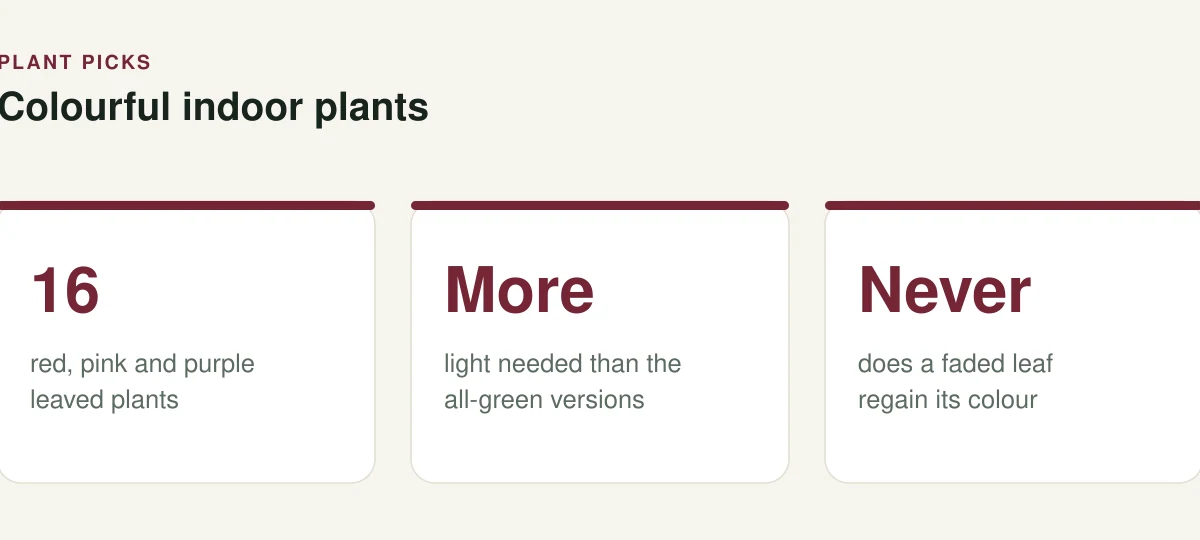
Red, Pink and Purple Leaf Indoor Plants: 16 Colourful Picks
Sixteen indoor plants with red, pink or purple foliage — and the light levels each one needs to keep its colour instead of fading back to green.
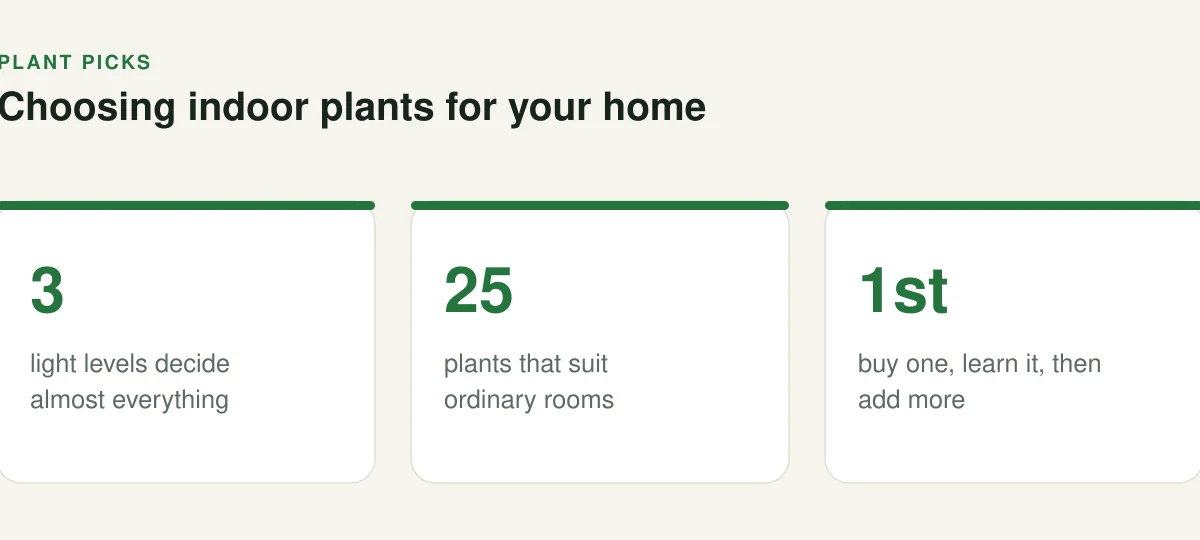
25 Best Indoor Plants for Home (With Names, Light Needs and Care)
The 25 indoor plants worth keeping at home, sorted by how much light you have and how much attention you can give — with names, pictures and honest difficulty ratings.
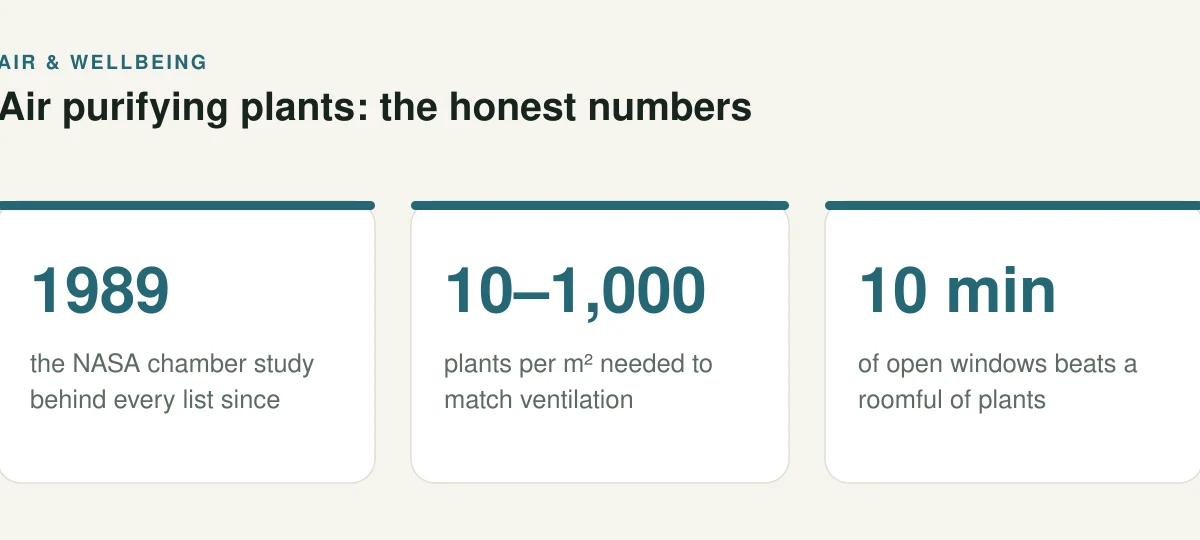
Air Purifying Indoor Plants: What the NASA Study Really Found
The 12 plants from NASA's clean air study, what they actually remove, and the honest arithmetic on how many you would need to change the air in a real room.