Peace Lily Indoor Plant: Benefits, Care and Why It Stops Flowering
What a peace lily actually does for your home, how to care for one indoors, and the reasons it wilts, browns or refuses to flower — with fixes for each.
The short answer
- The peace lily is one of the few plants that flowers in moderate indirect light.
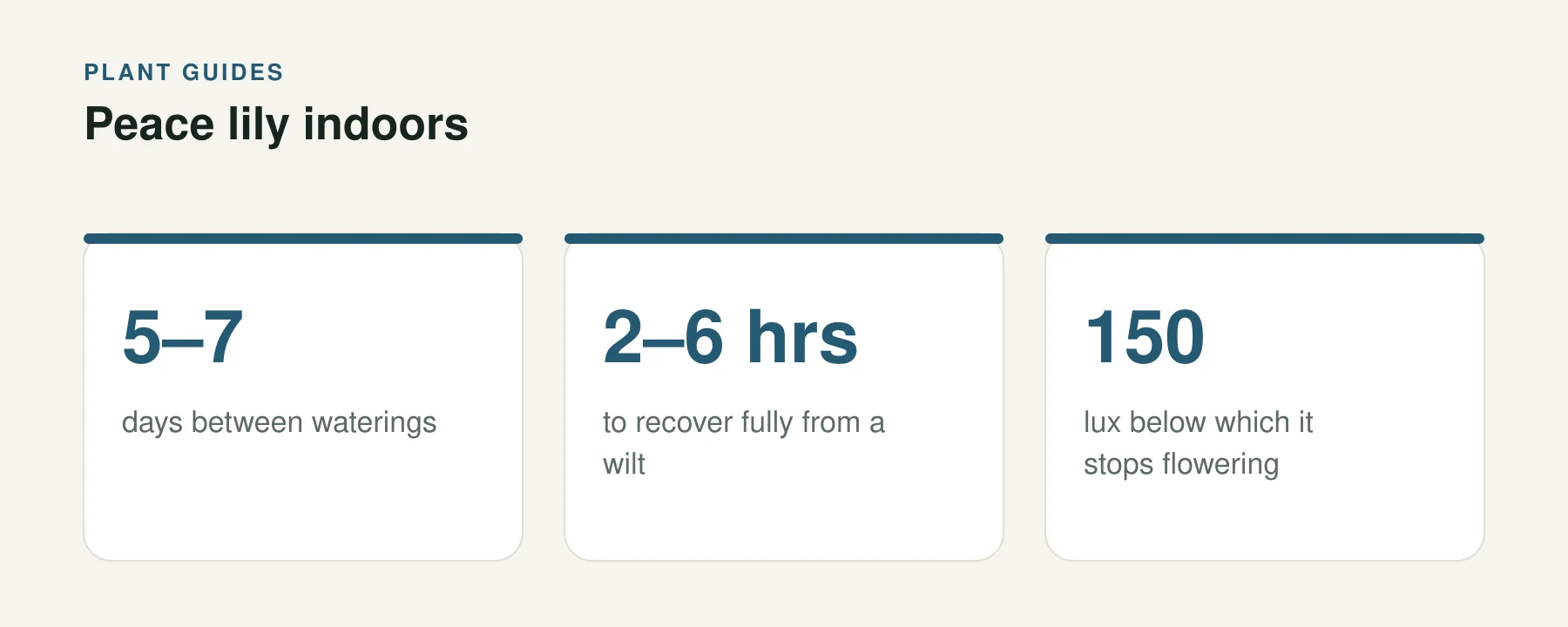
- It wilts dramatically when thirsty and recovers within hours — the clearest signal of any houseplant.
- Brown tips are usually tap water chemistry or fertiliser salts, not underwatering.
Key takeaways
- The dramatic wilt is a feature — it tells you exactly when to water, and the plant recovers in hours.
- The white 'flower' is a spathe, a modified leaf; the true flowers are on the spike inside it.
- Brown leaf tips are usually tap water chemistry or fertiliser salts, not underwatering.
- It is toxic to cats and dogs, so keep it off the floor in a pet household.
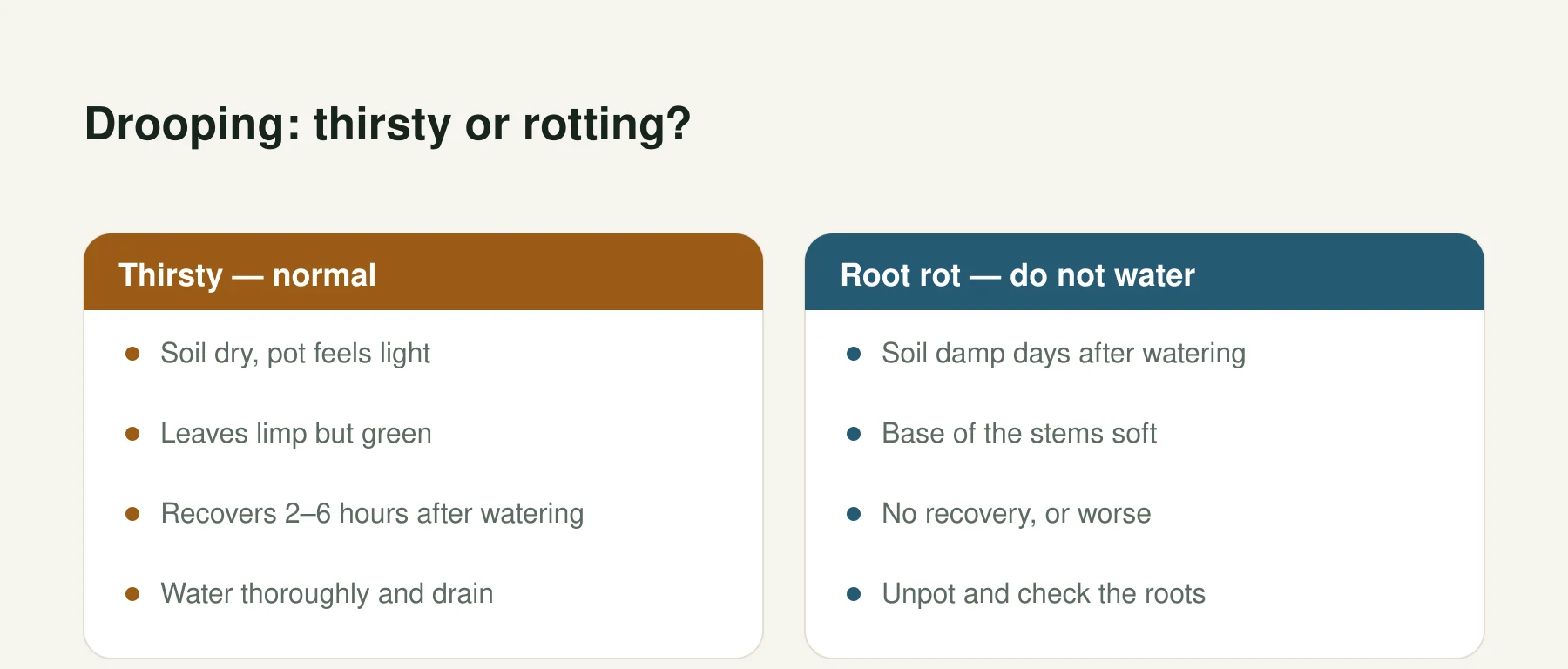
The peace lily (Spathiphyllum wallisii) is the plant most often given as a gift, and the one most often quietly written off once its first flowers fade. That is a shame, because it earns its place: it flowers in light where almost nothing else will, it tells you when it wants water more clearly than any other houseplant, and it is close to unkillable once you can read what it is telling you. Learning its two droops — thirsty and rotting — is most of the work.
#The real benefits
- Flowers in moderate light. Almost no other flowering houseplant will bloom several metres from a window. This is its genuine advantage.
- Tells you when it is thirsty. The whole plant droops theatrically and then recovers within a few hours of watering — the easiest feedback loop in the plant world.
- Raises humidity. A mature peace lily transpires steadily, which is a small but real benefit in dry, heated rooms.
- Tolerates neglect between waterings better than its dramatic wilting suggests.
- Removed the widest range of VOCs of any species in NASA's chamber trials — genuinely measured, though not at a rate that matters in a ventilated room.
#Care in five lines
| Factor | What it wants |
|---|---|
| Light | Moderate indirect; tolerates low, scorches in direct sun |
| Water | Every 5–7 days; keep lightly moist, never soggy |
| Humidity | 40%+ — brown tips appear below that |
| Temperature | 18–27 °C; damaged below 12 °C |
| Feed | Balanced liquid at half strength, monthly in spring and summer |
#Why it stopped flowering
Peace lilies bought in flower were forced into bloom in a nursery, often with gibberellic acid, under light levels a home cannot match. Once those blooms fade, the plant reverts to its natural cycle, which is one or two flushes a year — and only if conditions allow.
Move it brighter
Not into direct sun, but closer to a window. A peace lily two metres from an east window flowers; the same plant in a corridor produces leaves only.
Let it fill its pot
Peace lilies flower better when slightly root-bound. Repot only every two to three years, one size up.
Switch fertiliser while budding
General feed is nitrogen-heavy and drives foliage. A higher-phosphorus bloom feed at half strength encourages flowering.
Deadhead properly
Cut the whole flower stalk down to the base once the spathe turns green then brown — not just the flower itself.
Be patient
A plant recovering from a dark position may take a full season to flower again. Judge progress by whether new leaves are getting larger.
#Reading the symptoms
| Symptom | Cause | Fix |
|---|---|---|
| Whole plant drooping, soil dry | Thirst — normal behaviour | Water thoroughly; it recovers in 2–6 hours |
| Drooping with wet soil | Root rot | Stop watering, check roots, repot if brown and soft |
| Brown leaf tips | Fluoride/chlorine in tap water or salt buildup | Use filtered or rested water; flush the pot |
| Yellow older leaves | Natural ageing, or overwatering if several at once | Remove; check watering interval |
| Green flowers turning brown | Normal end of the flower cycle | Cut the stalk to the base |
| Leaves with pale, bleached patches | Direct sun | Move back from the window |
| No flowers, healthy leaves | Too little light | Move brighter and use a bloom feed |
#Is a peace lily safe indoors?
For people, yes — it is not a true lily and poses no risk beyond skin irritation from the sap in sensitive people. For cats and dogs it contains insoluble calcium oxalate crystals, which cause immediate mouth pain, drooling and swelling if chewed. It is rarely dangerous but genuinely unpleasant, so keep it on a shelf rather than the floor in a pet household. Note the important distinction: true lilies (Lilium, Hemerocallis) cause fatal kidney failure in cats. The peace lily is not one of them and is far less serious.
It is also one of the few plants that genuinely suits a bathroom — the humidity is ideal, and it copes with the low light of a small frosted window better than almost anything else you could put there. If your bathroom has no window at all, our no-sunlight guide covers what will hold up.
Frequently asked questions
What are the benefits of a peace lily indoor plant?
It flowers in moderate light where most flowering plants will not, signals thirst clearly by wilting and recovering, raises humidity in dry rooms, and removed the widest range of VOCs in NASA's chamber trials — though that last effect is negligible in a ventilated room.
Is the peace lily an indoor plant?
Yes. It is a tropical rainforest floor species that grows best in moderate indirect indoor light and is damaged by direct sun and by temperatures below about 12 °C.
Why is my peace lily not flowering?
Usually not enough light. Peace lilies flower in moderate indirect light but produce leaves only in dim corners. Move it closer to a window, keep it slightly root-bound, and use a higher-phosphorus fertiliser while it is budding.
Why does my peace lily have brown tips?
Most often fluoride and chlorine in tap water, or fertiliser salts accumulating in the soil. Switch to filtered or rested water, flush the pot with plain water every couple of months, and feed at half strength.
Is a peace lily poisonous to cats?
It contains calcium oxalate crystals that cause painful oral irritation, drooling and swelling if chewed — unpleasant but rarely dangerous. It is not a true lily, so it does not cause the fatal kidney failure that Lilium and Hemerocallis do in cats.
Sources and further reading
- Houseplants: plant profiles — Royal Horticultural Society. Species-level profiles and cultivation notes.
- Interior landscape plants for indoor air pollution abatement — NASA Technical Reports Server, 1989. The original 1989 sealed-chamber study behind every air-purifying plant list.
- Potted plants do not improve indoor air quality: a review and analysis of reported VOC removal efficiencies — Journal of Exposure Science & Environmental Epidemiology, 2020. Reanalysis converting chamber results into clean air delivery rates.
- Toxic and Non-Toxic Plants List — ASPCA Animal Poison Control. Toxicity status of every plant named, checked under its botanical name.
Related guides
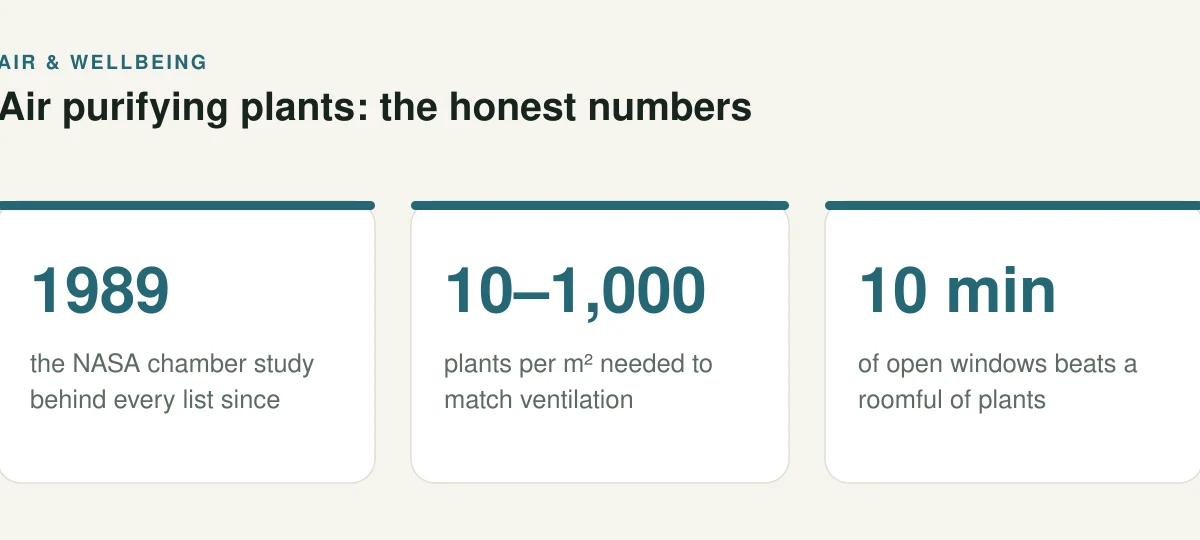
Air Purifying Indoor Plants: What the NASA Study Really Found
The 12 plants from NASA's clean air study, what they actually remove, and the honest arithmetic on how many you would need to change the air in a real room.
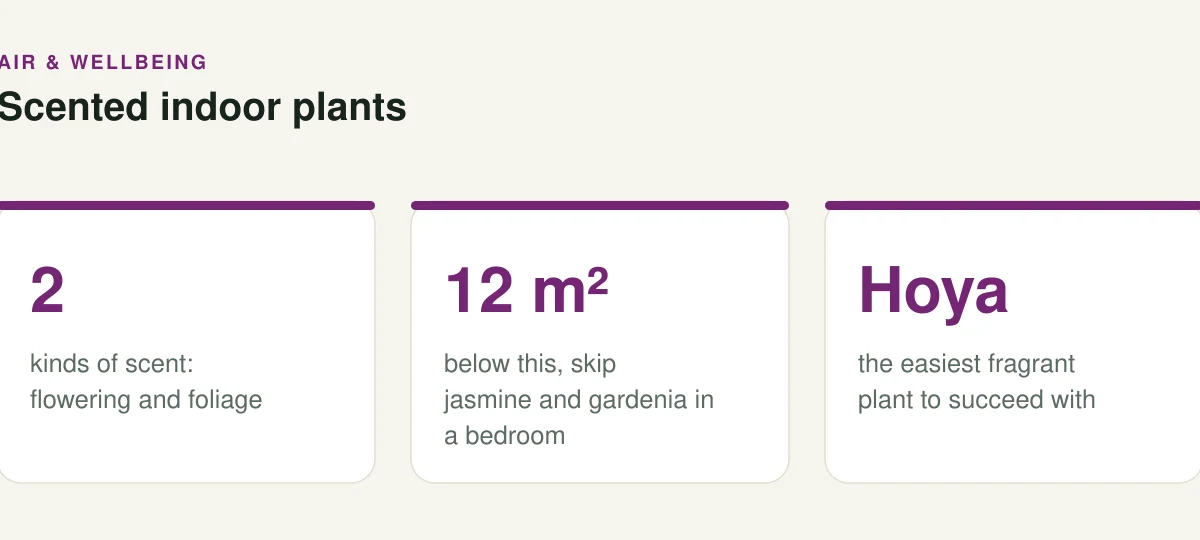
Scented Indoor Plants: 12 That Actually Perfume a Room
The indoor plants that genuinely smell good — flowering, foliage and herb options — with how strong each one is and how much light it needs to produce scent.
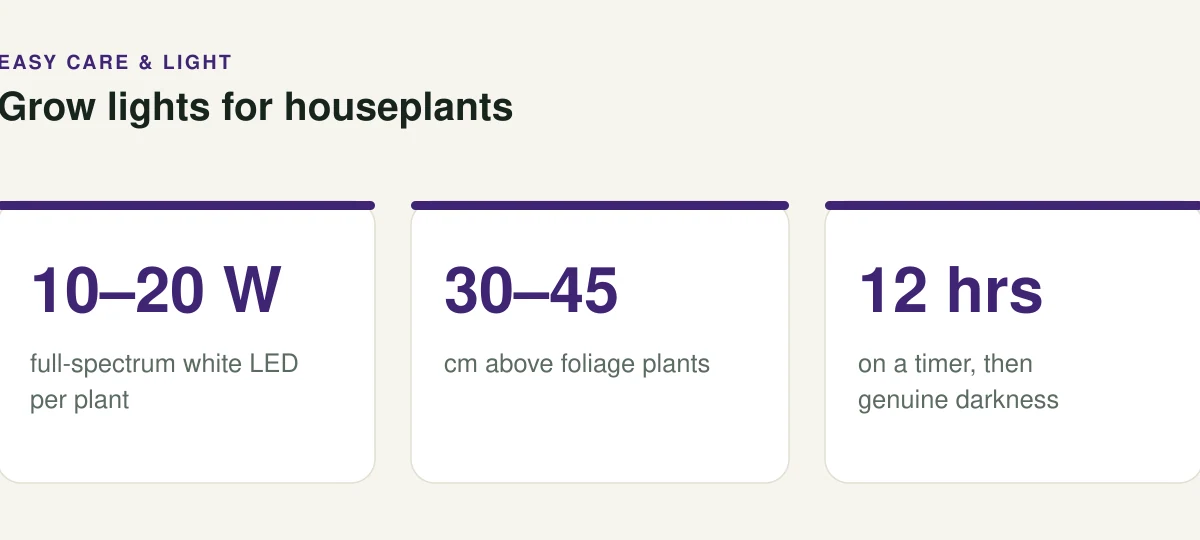
Grow Lights for Indoor Plants: What to Buy and How to Use One
How to choose a grow light for houseplants — wattage, spectrum, distance and run time — and why an ordinary full-spectrum LED bulb is usually enough.